
What Does Sustainable Business Look Like in Real Life?
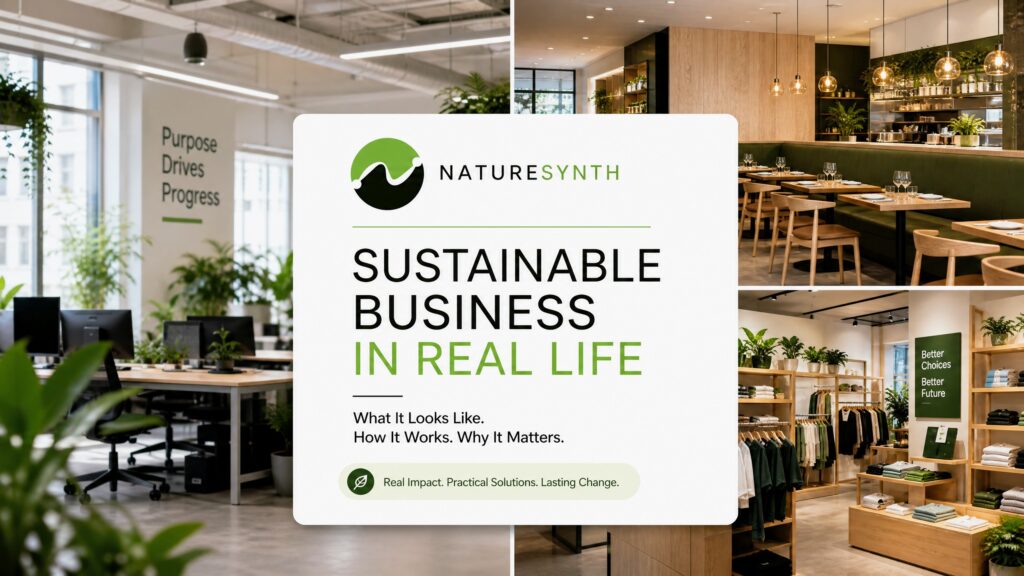
Many businesses hear about sustainable business in real life, but don’t know what it actually looks like.
In reality, sustainability is much simpler. It is about how a business runs day to day. It is about using resources wisely, reducing waste, and making better decisions over time.
So what does this actually look like in real life?
A Small Office Example
A typical office may believe it is already doing well because it does not produce visible waste like a factory or restaurant.
But when you look closely, there are small issues that add up.
Lights and computers may be left on after working hours. Paper is still used when digital options are available. Equipment may not be used efficiently.
A more sustainable office does a few simple things.
It switches off unused equipment at the end of the day. It reduces paper use by moving to digital systems. It pays attention to how electricity is used.
These are small changes, but over time they reduce costs and improve efficiency.
A Restaurant Example
Restaurants often focus on visible waste like packaging. But the bigger issue is usually inside the kitchen.
Food waste during preparation, poor storage, and overproduction are common problems.
A more sustainable restaurant takes a closer look at its operations.
It improves how food is stored to reduce spoilage. It prepares meals more carefully to avoid unnecessary waste. It tracks what gets thrown away and adjusts accordingly.
This not only reduces waste but also saves money and improves overall operations.
A Retail Business Example
Retail businesses often deal with excess packaging and unsold inventory.
Products may be overstocked, leading to waste. Packaging may be more than what is needed.
A more sustainable retail business focuses on better planning.
It reduces unnecessary packaging. It manages inventory more carefully. It works with suppliers who follow better practices.
These changes help reduce waste and improve the business at the same time.
What All These Examples Have in Common
Sustainability in real life is not about doing everything at once.
It is about understanding how your business operates and improving it step by step.
In all these examples, the businesses did not start with big changes. They started by paying attention to what was already happening.
They identified where resources were being wasted and made simple improvements.
Why Many Businesses Still Struggle
The main challenge is not the lack of ideas. It is the lack of clarity.
Many businesses try to take action without understanding their current situation. They make random changes and hope for results.
Without a clear starting point, it becomes difficult to know what is working and what is not.
How to Approach It the Right Way
A better approach is simple.
First, understand your current operations. Look at where you use resources and where you lose value.
Next, focus on the areas that matter most. Make small, practical improvements.
Then, track your progress over time.
This creates a clear path instead of guesswork.
Where NatureSynth Fits In
This is where a structured approach becomes important.
NatureSynth helps businesses understand their current position in a clear and simple way.
Instead of guessing, you see where your business stands and what needs attention.
From there, you can improve step by step and track your progress with confidence.
Final Thoughts
Sustainability is not something separate from your business. It is part of how your business operates every day.
It does not require perfection or big changes.
It starts with simple actions and clear understanding.
If you want to make real progress, begin by looking at how your business works today.
Next Step
Start by identifying one area in your business where resources may be wasted and take a simple step to improve it