
5 Signs Your Business Is Losing Money Without You Realising It
Many business owners focus on sales, customers, and daily operations. However, some of the biggest financial problems develop quietly in the background. Businesses often lose money gradually through small inefficiencies that seem harmless at first.
Over time, these hidden losses affect growth, reduce profit, and create operational pressure.
Understanding the common business losing money signs can help organisations identify problems earlier and improve performance before losses become more serious.
Here are five important signs many businesses overlook.
1. Revenue Is Increasing but Profit Remains Low
One of the clearest warning signs appears when sales continue growing but profit does not improve.
This situation confuses many business owners.
Products may be selling.
Customers may be increasing.
Business activity may appear strong.
Yet financial results remain disappointing.
This often means operational costs are growing alongside revenue.
Hidden expenses, inefficient processes, and poor cost control may quietly reduce profit margins.
Growth without efficiency rarely creates sustainable financial improvement.
2. Small Daily Expenses Keep Adding Up
Many businesses lose money through repeated small expenses.
Extra fuel consumption.
Unnecessary transportation trips.
Repeated corrections.
Wasted materials.
Untracked subscriptions or tools.
Individually, these costs may seem insignificant.
Together, they create large financial pressure over time.
Small operational leakages often become major hidden losses when left unmanaged.
3. Employees Spend Time Repeating Tasks
Repeated tasks reduce productivity and increase operational cost.
Employees may spend time fixing avoidable mistakes, searching for missing information, or repeating processes that could be simplified.
This wastes time and resources.
Businesses sometimes overlook workflow inefficiencies because operations continue functioning.
However, repeated inefficiency quietly reduces performance and increases cost over time.
Efficient systems reduce unnecessary repetition.
4. Decisions Depend Mostly on Assumptions
Some businesses make important operational decisions without clear data or performance visibility.
Managers may rely heavily on estimates, memory, or assumptions instead of measurable insights.
This creates uncertainty.
Without proper tracking systems, businesses struggle to identify where resources are wasted or where inefficiencies exist.
Lack of visibility often leads to delayed problem solving.
Better information usually supports better decisions.
5. Operational Problems Keep Repeating
Recurring operational issues often indicate deeper system problems.
Missed deadlines.
Inventory shortages.
Repeated customer complaints.
Delayed processes.
Poor coordination.
When the same problems continue repeatedly, businesses usually spend additional money managing avoidable situations.
Recurring inefficiencies often reveal weaknesses in operational structure.
Fixing root causes is usually more effective than repeatedly managing symptoms.
Why Businesses Often Notice Losses Too Late
Many operational losses develop gradually.
Businesses adapt to small inefficiencies over time and begin treating them as normal.
Because the impact is spread across different activities, identifying the full financial effect becomes difficult.
The problem becomes visible only when profitability weakens significantly.
Earlier visibility helps businesses respond before losses become more serious.
Sustainability and Efficiency Are Closely Connected
Sustainability is not only about environmental goals.
It also involves operating efficiently and reducing unnecessary waste.
Businesses that improve systems, manage resources carefully, and reduce operational inefficiencies often become more financially stable.
Efficiency supports both sustainability and long term growth.
Where NatureSynth Fits
Many organisations know operational inefficiencies exist but struggle to identify where problems are happening.
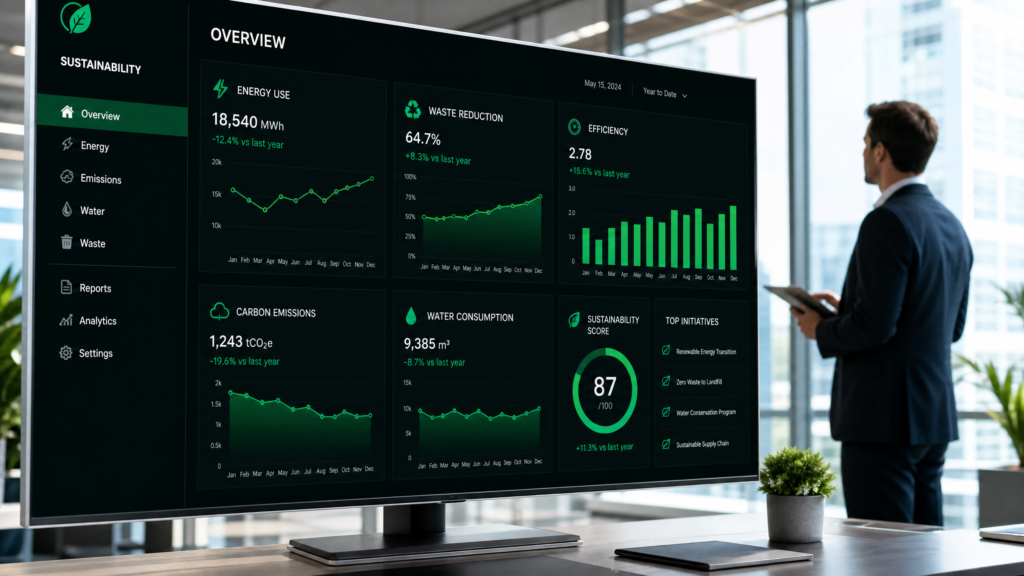
NatureSynth helps businesses understand operational patterns, identify hidden inefficiencies, and improve decision-making through clearer insights.
Better visibility helps businesses reduce waste and strengthen performance over time.
Conclusion
Businesses do not always lose money through major mistakes.
In many cases, losses happen quietly through small daily inefficiencies that accumulate gradually.
Recognising these signs early allows businesses to improve operations, reduce waste, and protect profitability.
Sometimes the biggest financial improvements begin with identifying the smallest operational problems.
Next Step
Take a closer look at your business today.
Which inefficiencies keep repeating?
Where do small losses happen daily?
What operational problems have become normal over time?
The answers often reveal opportunities for stronger business performance.