
Why Businesses Are Rethinking Waste in 2026
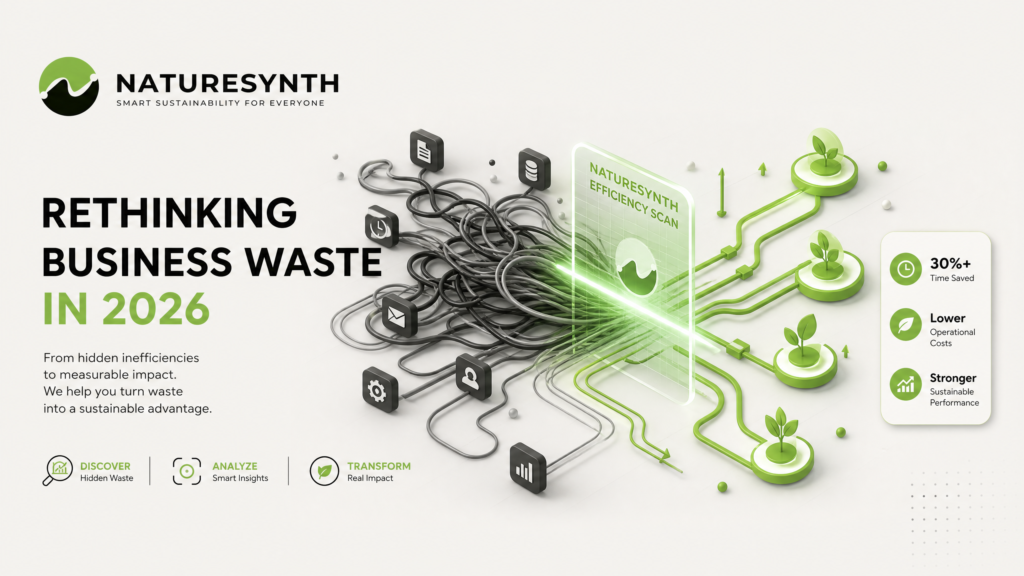
The conversation around waste is changing rapidly across global industries. In the past, many businesses viewed waste mainly as an environmental issue connected to recycling, disposal, or excess packaging. Today, organisations are beginning to see waste differently.
In 2026, businesses increasingly understand that waste also affects efficiency, profitability, operations, and long-term sustainability.
This shift explains why business waste reduction is becoming a major focus in modern business strategy.
Waste is no longer viewed only as a sustainability concern.
It is now recognised as a business performance issue.
Waste Exists in More Forms Than People Realise
Many people immediately think about physical waste.
Plastic.
Paper.
Unused materials.
Packaging.
However, businesses lose resources in many less visible ways.
Operational waste can include:
Wasted time
Repeated tasks
Inefficient processes
Unnecessary energy use
Poor coordination
Excess transportation
Unused data
Slow decision-making systems
These forms of waste often create financial pressure without attracting immediate attention.
Why Businesses Are Paying More Attention to Waste
Economic pressure is one of the biggest reasons organisations are rethinking waste.
Rising operational costs, supply chain disruptions, and increasing competition are forcing businesses to examine how efficiently they operate.
Many companies have realised that improving efficiency can strengthen both sustainability and profitability at the same time.
Reducing waste helps businesses:
Lower operating costs
Improve productivity
Use resources more effectively
Strengthen long-term resilience
Improve operational performance
Waste reduction is becoming practical rather than symbolic.
Operational Waste Quietly Reduces Profitability
Some businesses focus heavily on increasing revenue while overlooking inefficiencies within operations.
This creates a hidden problem.
Profit is often reduced gradually through operational waste.
Repeated workflow delays.
Unnecessary fuel consumption.
Poor inventory management.
Duplicate processes.
Inefficient communication systems.
Individually, these problems may appear small.
Together, they create significant financial impact over time.
Sustainability and Efficiency Are Becoming Connected
Businesses are increasingly recognising that sustainability is closely connected to efficiency.
Reducing waste does not only benefit the environment.
It also improves operational performance.
For example:
Efficient logistics reduce fuel costs.
Smarter resource use reduces unnecessary spending.
Better systems reduce operational delays.
Improved coordination reduces repeated work.
As a result, sustainability is becoming more integrated into core business operations.
Technology Is Changing How Businesses Identify Waste
Modern technology is helping organisations understand inefficiencies more clearly.
Data systems, artificial intelligence, and operational analytics now allow businesses to track patterns that were previously difficult to identify.
Businesses can now detect:
Resource inefficiencies
Workflow bottlenecks
Unusual energy usage
Repeated operational errors
Process delays
Better visibility helps organisations take corrective action earlier.
This reduces long-term operational waste.
Businesses Are Moving Beyond Surface-Level Sustainability
In previous years, many sustainability discussions focused heavily on public image and branding.
That approach is gradually changing.
Businesses now face growing pressure to demonstrate measurable improvements rather than broad sustainability statements.
Reducing operational waste provides visible and measurable results.
This is one reason waste reduction is becoming central to modern sustainability strategies.
Small Improvements Often Create Major Results
Businesses do not always need massive operational changes to improve performance.
Sometimes small adjustments create meaningful impact.
Reducing unnecessary transportation.
Improving workflow coordination.
Tracking resource usage more carefully.
Simplifying repeated tasks.
These improvements may appear minor individually, but together they can significantly strengthen operational efficiency.
Why Some Businesses Still Struggle With Waste Reduction
Despite growing awareness, many organisations still struggle to reduce waste effectively.
Common challenges include:
Limited operational visibility
Weak tracking systems
Poor internal coordination
Resistance to change
Dependence on outdated processes
Without clear insights, identifying hidden inefficiencies becomes difficult.
This slows improvement efforts.
Where NatureSynth Fits
Many businesses know inefficiencies exist but cannot clearly identify where waste is happening within operations.
NatureSynth helps organisations understand operational patterns, identify inefficiencies, and improve decision-making through clearer insights.
Better visibility supports stronger systems and more efficient performance.
Small operational improvements often create meaningful long-term benefits.
Conclusion
Businesses are rethinking waste in 2026 because waste affects far more than sustainability reporting.
It affects profitability, efficiency, resilience, and operational performance.
Modern organisations increasingly understand that reducing waste is not simply about doing less harm.
It is also about building smarter and more efficient systems.
Next Step
Take a closer look at your operations.
Where is waste occurring quietly?
Which inefficiencies have become normal over time?
What small improvements could strengthen performance?
Sometimes the biggest business opportunities begin with identifying what is being wasted.