
How Nigerian Businesses Can Turn Plastic Waste into Business Value
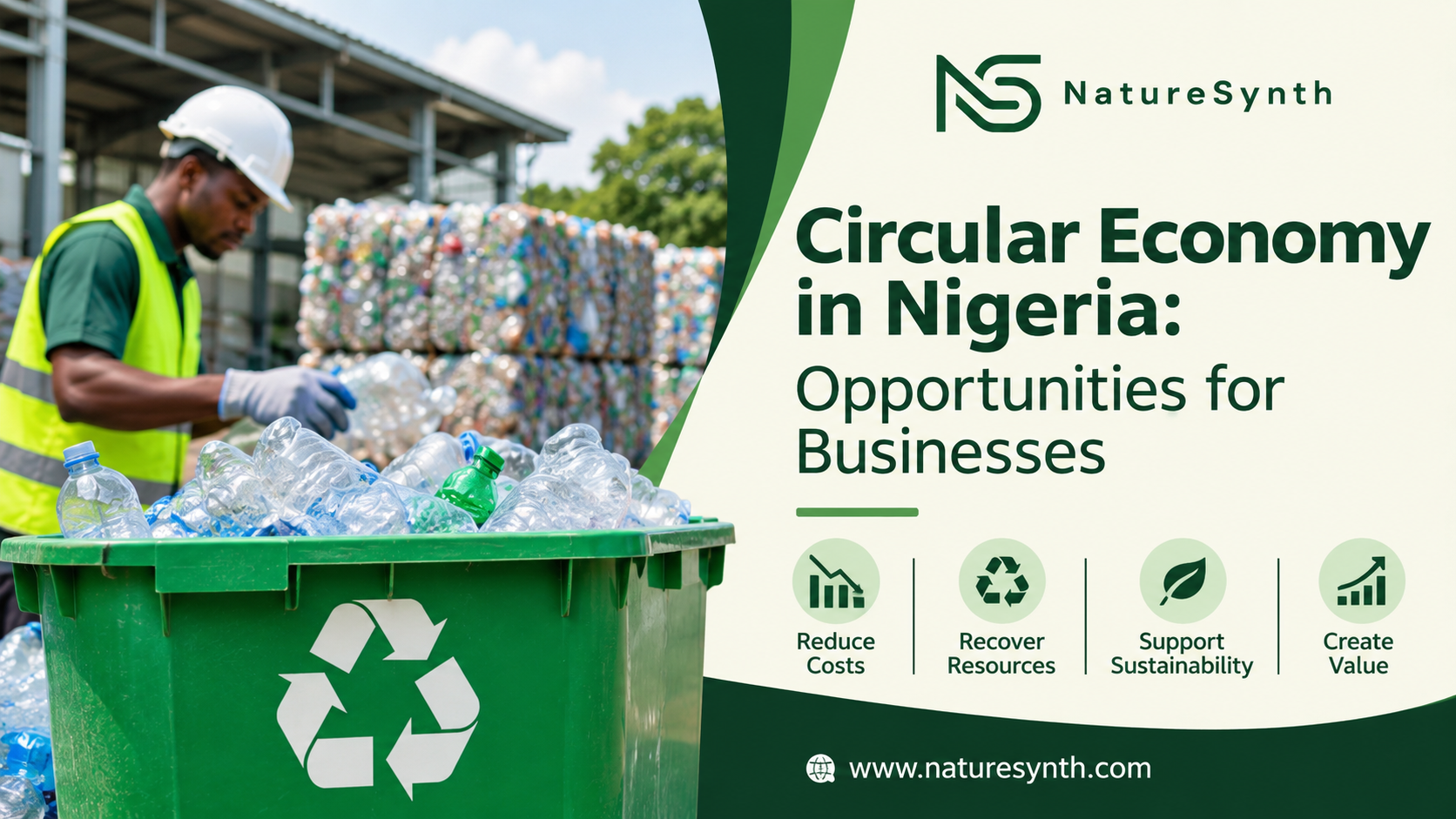
Plastic waste is often treated as an unavoidable business expense. However, with better resource management, some of the materials businesses discard can become valuable inputs for other production processes.
This approach is part of the circular economy, a model that encourages businesses to reduce waste, reuse materials and keep resources in circulation for as long as possible.
Nigeria is making progress in this area. In October 2026, the United Nations Industrial Development Organization (UNIDO) reported the completion of a major initiative supporting sustainable plastic value chains, recycling systems and private-sector innovation in the country. UNIDO
What does a circular economy mean for businesses?
In a traditional production model, businesses purchase materials, use them and dispose of what remains.
A circular economy takes a different approach. Instead of treating every leftover material as waste, businesses look for ways to reduce consumption, reuse materials, repair products and recover resources.
For example, a manufacturing company may reuse certain production materials, while a supermarket could work with recycling partners to recover plastic packaging.
The objective is to reduce waste while making better use of available resources.
4 ways businesses can benefit from plastic waste recovery
1. Reduce material costs
Businesses can examine their production and packaging processes to identify materials that are unnecessarily discarded. Reducing material losses can lower purchasing costs and improve resource efficiency.
2. Create value from recyclable materials
Plastic bottles, containers and certain packaging materials can be collected, sorted and supplied to recycling companies. Depending on the material and local market, businesses may recover some value from materials that would otherwise be discarded.
3. Build partnerships with recycling businesses
Organisations do not necessarily need to establish their own recycling facilities. They can work with waste collectors, recycling companies and material recovery organisations to develop more responsible disposal systems.
4. Improve sustainability performance
Better waste management can help businesses reduce their environmental impact and demonstrate more responsible resource use. It can also provide useful information for sustainability assessments and reporting.
What is happening in Nigeria?
Nigeria’s circular economy efforts are increasingly involving businesses, government institutions and development organisations.
UNIDO’s plastic value chain project, supported by the Government of Japan, worked with recycling companies and other stakeholders to strengthen collection systems, introduce technologies and improve resource-efficient production.
The project also supported nine firms in adopting circular economy and resource-efficiency practices, demonstrating how better material management can improve production processes. UNIDO
These developments highlight an opportunity for more Nigerian businesses to examine how waste recovery and resource efficiency can become part of their operations.
Where should businesses start?
The transition does not have to begin with a major investment.
Businesses can start by identifying the materials they discard, understanding how much waste their operations generate and determining which materials can be reduced, reused or recovered.
A structured sustainability assessment can help organisations understand their current practices and identify areas that need improvement.
For businesses that need additional guidance, NatureSynth also provides advisory and sustainability support to help clarify priorities and develop practical improvement plans.
Conclusion
Plastic waste management is not only an environmental concern. It also presents opportunities to improve resource efficiency, reduce material losses and support new business activities.
Nigerian businesses can benefit by moving beyond the traditional approach of buying, using and discarding materials.
The first step is understanding where waste occurs and identifying how those resources can be put to better use.