
5 Signs Your Business Operations Are Inefficient
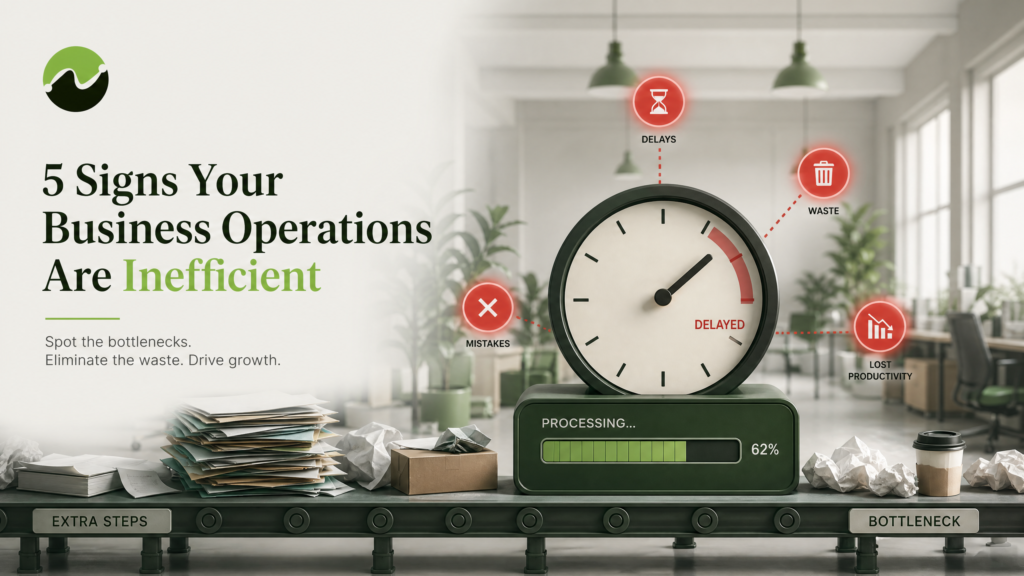
Many businesses do not realise their operations are inefficient until problems become serious. At first, everything may appear normal. Employees stay busy, tasks get completed, and daily activities continue as usual.
However, small operational problems often build up quietly over time.
These inefficiencies affect productivity, increase costs, and slow down growth.
Understanding the signs early helps businesses improve before the problems become larger.
Repeated Mistakes Keep Happening
One of the clearest signs of inefficient operations is repeated mistakes.
Employees may continue fixing the same issues again and again. Teams may repeat tasks because previous work was incomplete or unclear.
For example, customer orders may contain frequent errors. Staff may constantly correct inventory records. Important information may also get lost between departments.
When businesses spend too much time correcting avoidable problems, efficiency drops.
Repeated mistakes usually point to weak systems or unclear processes.
Simple Tasks Take Too Long
Another major sign of inefficiency is when basic tasks require too much time.
Approvals may move slowly. Communication may delay projects. Employees may wait unnecessarily before completing tasks.
Over time, these delays reduce productivity across the entire business.
In efficient businesses, systems help employees work smoothly and clearly. In inefficient businesses, simple tasks often become unnecessarily complicated.
Time waste may not look serious immediately, but it creates major operational losses over time.
Resource Use Continues to Increase
Businesses should pay close attention to how they use resources.
High electricity bills, excessive material use, unnecessary printing, and poor inventory control often indicate operational inefficiency.
For example, businesses may leave equipment running when nobody is using it. Restaurants may prepare more food than customers need. Offices may waste supplies because nobody monitors usage properly.
When businesses fail to manage resources carefully, costs continue rising unnecessarily.
Reducing waste improves both sustainability and operational performance.
Poor Communication Creates Confusion
Communication problems often create hidden inefficiencies inside businesses.
Employees may receive unclear instructions. Departments may fail to share important information. Teams may misunderstand priorities and deadlines.
As a result, tasks take longer to complete.
Poor communication also creates frustration among employees. In many cases, businesses lose productivity simply because teams are not aligned properly.
Clear communication improves coordination, reduces mistakes, and helps operations run more smoothly.
The Business Does Not Measure Performance
Many businesses operate without tracking important information.
They do not measure energy use, operational delays, resource waste, or productivity levels.
Without measurement, businesses cannot identify where inefficiencies exist.
Everything feels normal because nobody is monitoring performance carefully.
Measurement creates visibility. Once businesses begin tracking operations, they often discover problems they previously ignored.
This is one reason efficient businesses focus heavily on data and observation.
Why These Signs Matter
Small inefficiencies may not seem dangerous at first.
However, they create larger problems over time.
Businesses spend more money. Employees become less productive. Operations slow down. Customers may also experience delays or inconsistent service.
These issues reduce growth and make businesses less competitive.
The earlier businesses identify inefficiencies, the easier they become to fix.
What Businesses Should Do
Businesses do not need to solve every problem immediately.
They should start by observing daily operations more carefully.
Look for repeated mistakes. Identify delays. Measure resource use. Review communication systems.
Small improvements made consistently often create strong long-term results.
Operational efficiency improves gradually through awareness and better systems.
Where NatureSynth Helps
Many businesses struggle to identify inefficiencies because they focus only on short-term activities.
NatureSynth helps businesses understand how their operations function and where resources are being wasted.
Instead of relying on assumptions, businesses gain clearer insight into their processes, resource use, and operational patterns.
This helps businesses improve efficiency step by step.
Conclusion
Inefficient operations do not always appear as major business problems immediately.
In many cases, the warning signs appear quietly through repeated mistakes, delays, poor communication, and wasted resources.
Businesses that identify these signs early can improve productivity, reduce waste, and strengthen long-term performance.
Efficiency begins with awareness.
Next Step
Take a closer look at your daily operations today.
Ask yourself:
Are simple tasks taking too long?
Do teams repeat the same mistakes?
Are resources being wasted unnecessarily?
Small observations often reveal important problems.