
5 Hidden Costs That Are Draining Nigerian Businesses in 2026
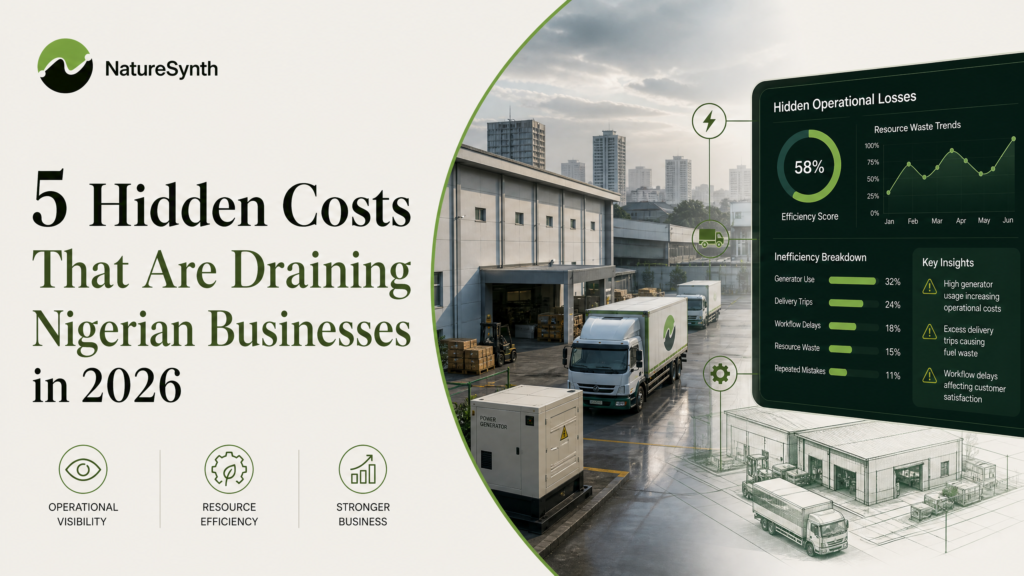
Many business owners focus on obvious expenses such as rent, salaries, fuel, and transportation. However, hidden costs Nigerian businesses face often create equally serious financial pressure.
These costs rarely appear as major problems at first.
They develop quietly through inefficient operations, repeated mistakes, and unnoticed resource waste.
Over time, these small issues reduce profits and make growth more difficult.
As operating conditions become more challenging in 2026, businesses can no longer afford to ignore hidden losses.
Here are five hidden costs many Nigerian businesses may be overlooking.
1. Unnecessary Generator Use
Power challenges remain a major issue for many Nigerian businesses.
As a result, businesses often depend heavily on generators.
However, some operational habits increase fuel consumption unnecessarily.
Generators sometimes continue running during low activity periods. Equipment may stay powered when nobody uses it. Businesses may also fail to monitor energy usage carefully.
Small inefficiencies create larger costs over time.
Reducing unnecessary generator use can create immediate savings.
2. Repeated Delivery and Transportation Trips
Transportation costs continue increasing.
Fuel prices and logistics expenses affect many businesses daily.
However, poor scheduling can increase these costs further.
Businesses sometimes make repeated delivery trips that could have been combined. Poor route planning and inefficient coordination often create unnecessary expenses.
Over time, transportation inefficiencies reduce profitability.
Improving planning may help businesses reduce avoidable costs.
3. Poor Communication and Workflow Delays
Communication problems often appear harmless.
However, delays caused by unclear instructions, repeated explanations, missing information, and poor coordination affect productivity.
Employees may repeat tasks or wait unnecessarily for approvals and updates.
These delays waste time and reduce efficiency.
Businesses often underestimate the financial effect of workflow problems.
Time lost frequently becomes money lost.
4. Resource Waste Inside Daily Operations
Many businesses lose money through small daily waste.
Unused materials.
Excess printing.
Inventory losses.
Poor storage practices.
Unnecessary resource use.
Individually, these problems seem minor.
Together, they quietly create significant financial pressure.
Businesses often overlook these costs because they happen gradually.
5. Repeated Operational Mistakes
Mistakes create hidden expenses.
Incorrect orders, repeated corrections, duplicated work, and avoidable errors affect operational performance.
Businesses spend additional time and resources fixing preventable problems.
Without proper systems, mistakes continue repeating.
Operational consistency becomes increasingly important as costs rise.
Why Hidden Costs Matter More in 2026
Economic pressure affects many Nigerian businesses.
Rising fuel costs, inflation, logistics expenses, and operational challenges continue increasing business costs.
Because of this, hidden losses become more difficult to absorb.
Businesses that identify operational waste early often create stronger long term performance.
Small improvements can produce meaningful results.
Sustainability Also Means Smarter Operations
Many people think sustainability only focuses on environmental topics.
Today, sustainability increasingly connects with business efficiency.
Reducing waste.
Improving processes.
Managing resources carefully.
Building stronger systems.
These actions support both operational performance and long term business growth.
Where NatureSynth Fits
Many businesses know costs are increasing but struggle to identify where losses happen.
NatureSynth helps businesses understand inefficiencies, identify waste patterns, and gain clearer operational insights.
Understanding where resources disappear helps businesses make smarter decisions.
Small changes often create meaningful impact.
Conclusion
Not every business loss comes from large expenses.
Many hidden costs develop quietly through daily operations.
Businesses that identify inefficiencies early often improve performance, reduce waste, and create stronger systems.
Sometimes the biggest opportunities hide inside the smallest problems.
Next Step
Take a closer look at your operations today.
Ask yourself:
Which small problems happen repeatedly?
Where does unnecessary waste happen?
What hidden costs have we accepted as normal?
Awareness often creates the first opportunity for improvement.