
Can AI Really Make Businesses More Sustainable in 2026?
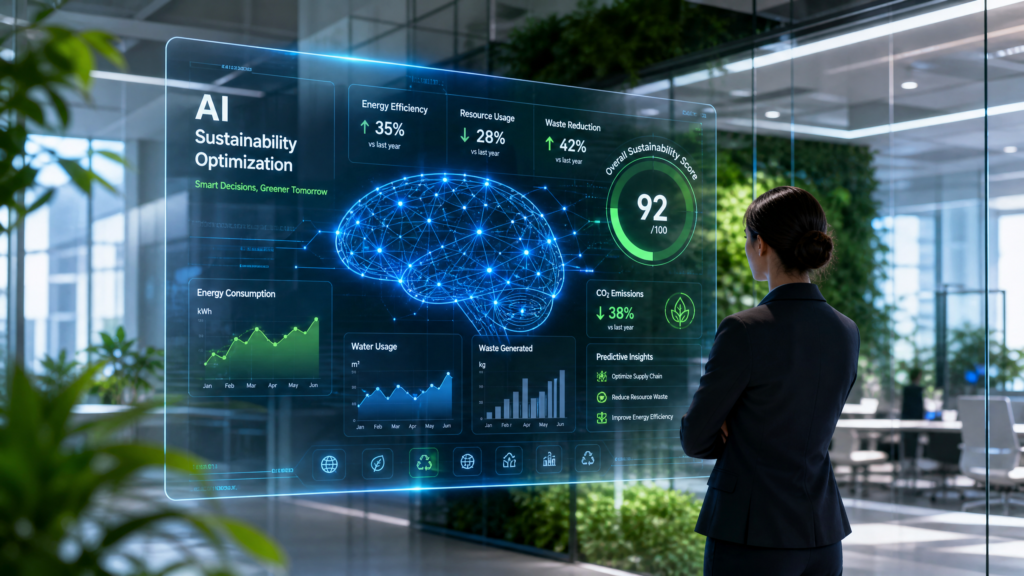
Interest in AI for sustainable business continues to grow as companies search for smarter ways to improve operations, reduce waste, and make better decisions. Artificial intelligence is no longer viewed only as a technology trend. Increasingly, businesses see it as a tool that can support long term sustainability goals.
As organisations face rising operational costs, growing data complexity, and pressure to improve efficiency, attention is shifting toward practical technologies that deliver measurable results.
This raises an important question.
Can artificial intelligence truly help businesses become more sustainable in 2026?
Sustainability Challenges Are Becoming More Complex
Modern businesses manage large amounts of information every day.
Energy use.
Resource consumption.
Supply chain activities.
Customer behavior.
Operational performance.
Tracking and understanding these patterns manually becomes difficult as businesses grow.
Important details often remain hidden inside large volumes of data. Missed insights can lead to inefficiencies that quietly increase costs and waste.
Many organisations now use smarter systems to identify these patterns earlier.
AI Helps Businesses Understand Operations Better
Artificial intelligence works by identifying trends and patterns across large datasets.
Instead of reviewing information manually, businesses can process operational data more efficiently and identify opportunities for improvement.
Patterns that once remained unnoticed can become easier to understand.
For example, AI systems may reveal:
Areas with repeated resource waste
Operational bottlenecks
Unusual energy use
Inefficient workflows
Performance trends
Better visibility often leads to stronger decisions.
Efficiency and Sustainability Are Becoming Connected
Many people still separate sustainability from business performance.
That distinction is becoming less common.
Businesses increasingly recognise that sustainability also includes operational efficiency.
Reducing waste.
Managing resources carefully.
Improving systems.
Making smarter decisions.
These actions support both sustainability and long term business growth.
AI can strengthen these efforts by helping businesses operate with greater precision.
Smarter Decisions Can Reduce Waste
Operational waste does not always appear immediately.
Repeated mistakes, unnecessary processes, inefficient scheduling, and poor resource allocation often develop gradually.
Artificial intelligence can help identify these patterns before they create larger problems.
Earlier insights allow businesses to respond faster.
Small improvements made consistently can create meaningful long term impact.
Human Judgment Still Matters
Despite growing interest in AI, technology alone does not solve every challenge.
Business goals still require human direction.
Leadership decisions, operational understanding, and strategic thinking remain essential.
Artificial intelligence performs best when organisations combine technology with practical business knowledge.
The goal is not replacing people.
The goal is supporting smarter decisions.
Businesses Are Moving Beyond Guesswork
Traditional decision making sometimes depends heavily on assumptions.
Today, businesses increasingly rely on evidence and measurable insights.
This shift explains why AI adoption continues expanding across different industries.
Leaders want clearer answers.
Teams want stronger visibility.
Organisations want practical ways to improve efficiency and reduce waste.
Data driven decision making is becoming more important in modern business environments.
Where NatureSynth Fits
Many businesses understand that operational inefficiencies exist but struggle to identify where they happen.
NatureSynth helps organisations understand operational patterns, identify inefficiencies, and discover opportunities for improvement.
Smarter insights support better business decisions and more efficient systems.
Small changes often lead to meaningful long term results.
Conclusion
Artificial intelligence alone does not create sustainable businesses.
However, AI can become a powerful tool for organisations seeking better visibility, improved efficiency, and stronger operational decisions.
As businesses continue adapting to changing demands in 2026, sustainability increasingly depends on understanding systems rather than relying on assumptions.
Technology may not replace strategy, but it can strengthen it.
Next Step
Take a closer look at your organisation.
Ask:
Where do inefficiencies exist?
Which patterns remain hidden?
What decisions would improve with stronger insights?
Better information often creates better outcomes.