
The Future of Sustainable Business: What Will Change by 2030?
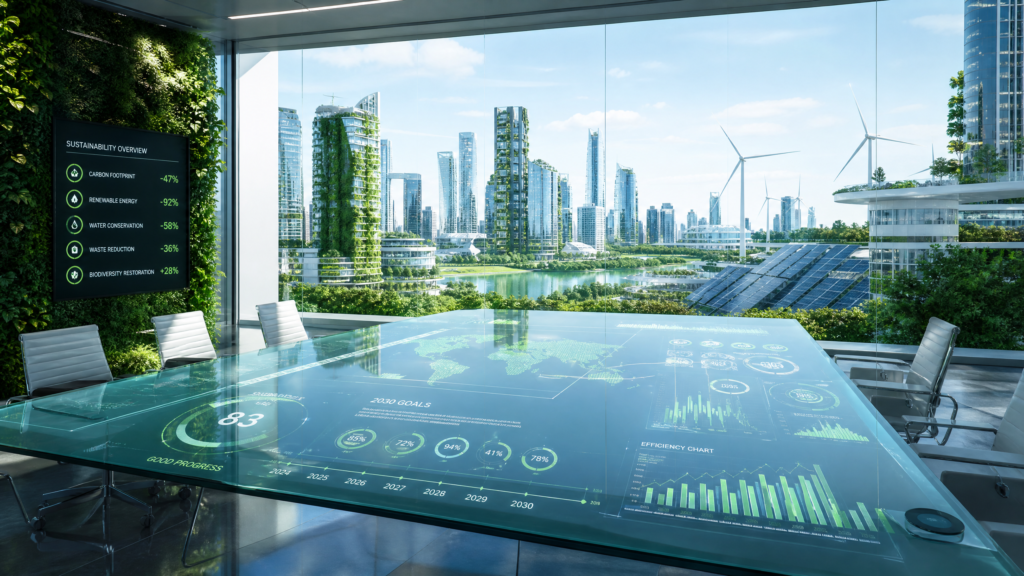
Interest in the future of sustainable business is increasing as companies try to understand how global markets, technology, and environmental expectations will evolve over the next decade. By 2030, sustainability is expected to move from being a separate initiative to becoming a core part of how businesses operate.
This shift will not only affect large corporations but also small and medium-sized enterprises across different regions.
The way businesses manage resources, make decisions, and measure success is likely to change significantly.
Sustainability Will Become a Core Business Function
In the past, sustainability was often treated as a supporting function within organisations.
Many companies placed it under compliance or corporate responsibility departments.
By 2030, this approach is expected to change.
Sustainability will likely become integrated into core business strategy and daily operations.
Instead of being optional or secondary, it will influence decision-making across finance, operations, supply chains, and product development.
Businesses will no longer ask whether sustainability is necessary.
They will focus on how to implement it effectively.
Technology Will Play a Central Role
Technology is expected to shape the future of sustainable business in significant ways.
Artificial intelligence, automation, and data analytics will help organisations understand operations more clearly.
Companies will increasingly rely on digital tools to track resource use, reduce waste, and improve efficiency.
Instead of making decisions based on assumptions, businesses will depend more on real-time data and predictive insights.
This will help organisations identify inefficiencies earlier and respond more effectively.
Efficiency Will Become More Important Than Expansion Alone
In earlier business models, growth was often measured primarily by expansion.
More production, sales and markets.
However, by 2030, efficiency is expected to become equally important as expansion.
Businesses will focus more on how effectively resources are used rather than simply how much is produced.
Reducing waste, improving workflows, and optimising systems will become key indicators of success.
This shift will redefine what “growth” means in practical terms.
Transparency Will Influence Business Trust
Trust is becoming a major factor in business performance.
Customers, investors, and stakeholders are increasingly interested in how companies operate behind the scenes.
By 2030, transparency is expected to become even more important.
Businesses will be expected to provide clearer evidence of their sustainability claims.
This includes measurable data, verifiable actions, and consistent reporting.
Companies that fail to demonstrate transparency may face growing skepticism.
AI and Data Will Drive Sustainability Decisions
Artificial intelligence and data systems are expected to become central tools in sustainability management.
Businesses will use AI to identify inefficiencies, forecast demand, and improve operational planning.
Data-driven insights will help organisations make better decisions about resource allocation and environmental impact.
This shift will reduce reliance on guesswork and improve accuracy in decision-making processes.
As a result, sustainability will become more measurable and structured.
Supply Chains Will Become More Efficient and Localised
Global supply chains have already faced disruptions in recent years.
By 2030, many businesses are expected to redesign supply systems to become more efficient and resilient.
This may include more local sourcing, better logistics planning, and reduced unnecessary transportation.
The goal will be to reduce costs while improving stability and sustainability.
Efficiency will become a key priority in supply chain management.
Small Businesses Will Also Experience Major Changes
Sustainability transformation will not be limited to large corporations.
Small and medium-sized businesses will also be affected.
More affordable technology tools will make it easier for smaller organisations to track performance and improve efficiency.
This will allow SMEs to adopt better systems without requiring large investments.
As a result, sustainability practices will become more widespread across different business sizes.
Challenges Will Still Exist
Despite progress, challenges will remain.
Not all businesses will adapt at the same pace.
Some may struggle with costs, technical skills, or organisational change.
Others may continue to focus on short-term performance rather than long-term improvement.
These challenges may slow down full adoption in some sectors.
However, the direction of change is becoming increasingly clear.
Where NatureSynth Fits
As businesses prepare for the future, understanding operational efficiency becomes more important.
NatureSynth helps organisations identify inefficiencies, understand resource patterns, and improve decision-making processes.
Smarter systems support better long-term outcomes and more sustainable business performance.
Conclusion
By 2030, sustainable business is expected to be more integrated, data-driven, and efficiency-focused.
Technology, transparency, and operational improvements will shape how organisations operate and compete.
Businesses that adapt early may be better positioned for long-term success in a changing global environment.
Next Step
Consider your current systems.
Are they built for long-term efficiency?
Do they support transparency and better decision-making?
The future of business will increasingly depend on the quality of these answers.