
Learning and Capacity: Why Tools Alone Don’t Fix a Sustainability Gap
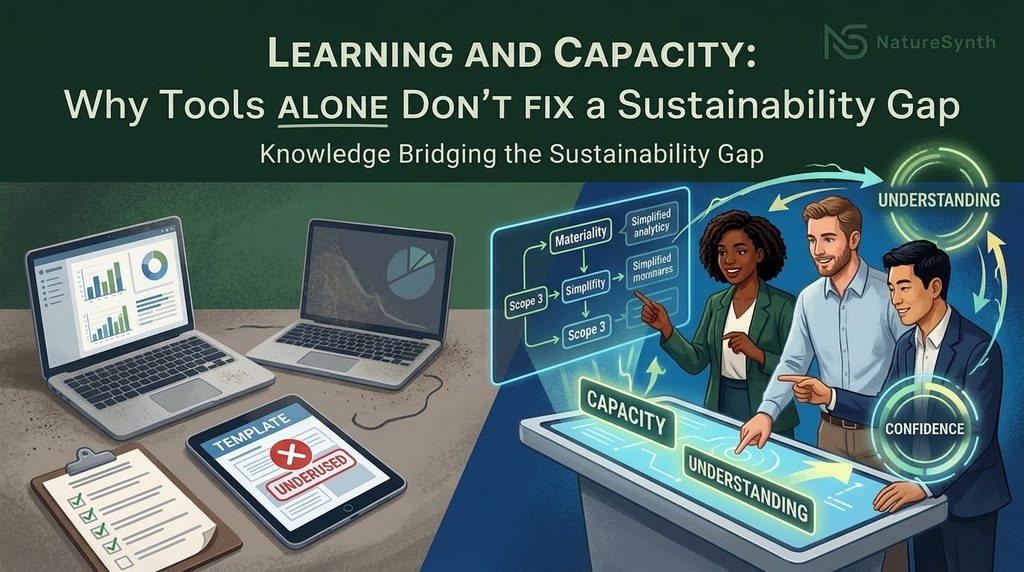
Give a business the best sustainability tools available, and nothing changes if nobody on the team understands what to do with them. Learning and capacity exists precisely because a platform, a checklist, or a template only helps once the people using it actually know how to apply it.
Why This Gap Gets Overlooked
Businesses often invest in assessments, templates, and reporting tools while assuming the people using them will simply figure things out along the way. However, sustainability concepts carry real terminology, and unfamiliar terminology slows everything down. A team member unsure what “materiality” or “Scope 3” actually means will hesitate to act, even with the right tool sitting in front of them.
Because of this, capacity building matters just as much as the tools themselves. Skipping it usually means good tools sit underused.
What Learning and Capacity Actually Covers
This solution focuses on building real understanding, not just handing over access to a platform. That typically includes structured lessons covering core sustainability concepts, practical guidance tied to real assessment findings, and training built for people without a sustainability background rather than specialists. Free, accessible sustainability education already exists at scale elsewhere. The SDG Academy, a UN-affiliated platform, offers dozens of free courses precisely because the barrier to entry has never been willingness. It has been access and confusion.
NatureSynth’s approach to learning and capacity applies the same logic at the scale of an individual business, connecting what a team learns directly to what their own assessment actually found.
Why Capacity Building Changes Outcomes
A business that understands why a recommendation matters tends to act on it faster than a business that receives the same recommendation without context. As a result, capacity building shortens the gap between receiving a finding and actually doing something about it. This matters because sustainability progress usually stalls not from a lack of information, but from a lack of confidence in applying it.
Who This Solution Fits
A startup founder wearing every hat in the business benefits from a fast, practical grounding rather than a lengthy course. An SME team distributing sustainability responsibility across a few people needs shared understanding, not one person holding all the knowledge. An enterprise coordinating sustainability efforts across departments needs consistent baseline knowledge across all of them. The format changes by size. The underlying need for real understanding does not.
Getting Started
If your business has sustainability tools nobody feels confident using, that gap is exactly what this solution addresses. You can explore learning and capacity alongside NatureSynth’s other solutions at naturesynth.com.