
For SMEs: Why NatureSynth Built a Different Starting Point
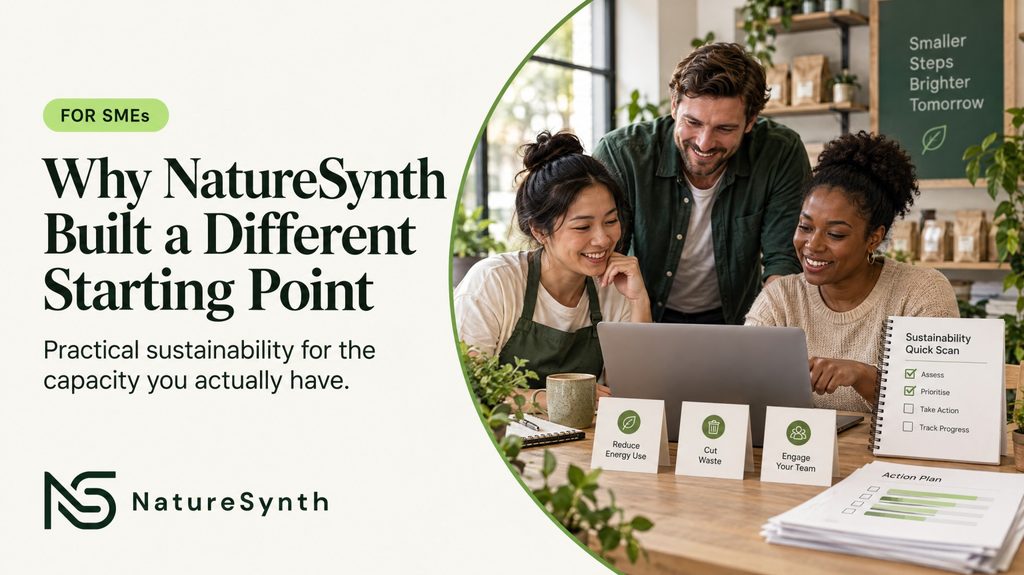
Small and medium businesses often get treated as an afterthought in sustainability conversations, as if the real work only applies once a company reaches a certain size. For SMEs navigating daily operational pressure, that assumption makes sustainability feel like something to revisit later, once there is more time, more budget, or more staff. NatureSynth built its SME segment specifically to challenge that assumption.
Why SMEs Get Overlooked
Most sustainability frameworks were originally designed with large, multinational organizations in mind. Extensive audits, dedicated compliance teams, and significant budgets make sense at that scale. However, those same expectations become a genuine barrier for a business with a handful of employees and no dedicated sustainability role. As a result, many SMEs disengage entirely, not from a lack of interest, but from a reasonable sense that the available tools were never built for them.
What the SME Path Actually Looks Like
For SMEs, NatureSynth starts with the same free Quick Scan available to any business, but the path forward stays proportionate to what a smaller team can realistically manage. Instead of assuming dedicated staff or significant budget, this path emphasizes practical, sequential steps: understand your current position, prioritize the highest-impact changes first, and build documentation gradually rather than all at once.
Because of this, an SME is not asked to replicate what a much larger company would do. It is asked to make real progress at a pace that fits its actual capacity.
Why This Matters Beyond Good Intentions
SMEs increasingly face sustainability questions they did not create. A larger customer’s procurement team sends a questionnaire. An investor asks about environmental practices before a funding decision. A new regulation applies regardless of company size. In other words, the pressure to engage with sustainability is arriving whether or not an SME feels ready, and having a proportionate starting point matters more once that pressure lands.
Building Habits Early
An SME engaging with sustainability now, even modestly, tends to find the work easier to scale later than a business starting from zero once it has grown significantly larger. Small, consistent steps taken early create documentation, habits, and institutional knowledge that a rushed, reactive effort later cannot easily replicate.
Getting Started
If your business has avoided sustainability work because it felt built for companies much larger than yours, the SME path at NatureSynth was built specifically to prove otherwise. You can start with a free Quick Scan at naturesynth.com.