
Why Plastic Pollution Is Becoming a Bigger Problem in Nigeria
Plastic has become part of everyday life in Nigeria.
From water sachets and shopping bags to food packaging and beverage bottles, plastic products are everywhere. They are affordable, lightweight, and convenient. However, the same qualities that make plastic useful also make it one of the country’s biggest environmental challenges.
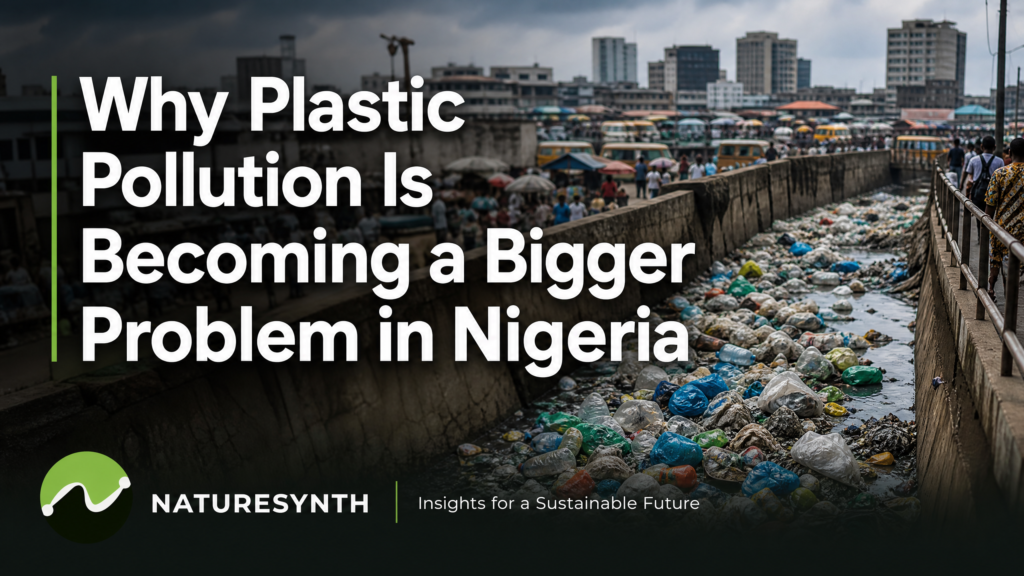
Across many Nigerian cities and communities, plastic waste is becoming increasingly difficult to manage. Roadsides, drainage channels, rivers, beaches, and open spaces are often littered with discarded plastics. Consequently, the problem extends beyond appearance. It affects public health, economic activities, and environmental sustainability.
Therefore, plastic pollution Nigeria deserves greater attention from households, businesses, and policymakers alike.
Understanding Plastic Pollution in Nigeria
Plastic pollution occurs when plastic waste is improperly disposed of and accumulates in the environment.
Unlike organic waste, most plastics do not decompose quickly. Instead, they remain in the environment for decades, gradually breaking into smaller particles known as microplastics.
In Nigeria, rapid urbanisation, population growth, and increasing plastic consumption have intensified the problem. Meanwhile, waste collection and recycling systems have struggled to keep pace.
As a result, plastic waste continues to accumulate across both urban and rural communities.
Everyday Habits Contribute to the Problem
Plastic pollution is not caused by one source alone.
Single-use shopping bags, plastic bottles, food wrappers, takeaway containers, and sachet water packaging all contribute to the growing volume of waste.
Unfortunately, many of these items are discarded carelessly after use.
Some end up on roadsides. Others are thrown into drainage channels or open spaces.
Although each item may appear insignificant, millions of discarded plastics create a serious environmental challenge over time.
Therefore, reducing plastic pollution Nigeria begins with recognising how everyday habits influence the environment.
Plastic Waste Contributes to Flooding
Flooding affects many Nigerian communities every year.
While heavy rainfall is one contributing factor, blocked drainage systems often make the situation much worse.
Plastic bottles, bags, and sachets frequently accumulate inside gutters and waterways.
Consequently, water cannot flow freely during rainfall.
The result is overflowing drains, flooded streets, damaged property, and disrupted livelihoods.
Therefore, proper plastic waste disposal is not only an environmental responsibility but also an important step towards reducing flood risks.
Environmental and Health Impacts
Plastic pollution affects ecosystems in several ways.
Animals may mistake plastic for food, leading to injury or death.
Meanwhile, rivers and other water bodies become polluted, reducing water quality and harming aquatic life.
As plastics gradually break down, they also release tiny particles into the environment.
Although research into the long-term effects continues, scientists have raised concerns about the presence of microplastics in soil, water, and food systems.
Furthermore, when plastic waste is burned openly, harmful smoke can affect air quality and human health.
Consequently, managing plastic waste responsibly protects both people and the environment.
The Economic Cost Often Goes Unnoticed
Plastic pollution also carries economic consequences.
Communities spend resources clearing blocked drainage systems.
Businesses may face higher cleaning and waste management costs.
Tourism can also be affected when beaches, parks, and public spaces become polluted.
Additionally, flooding linked to blocked drains can damage homes, roads, and commercial activities.
Therefore, preventing plastic pollution is often less costly than dealing with its long-term consequences.
Practical Steps Nigerian Households Can Take
Meaningful change begins with simple actions.
Households can reduce plastic waste by carrying reusable shopping bags instead of accepting new plastic bags for every purchase.
Similarly, reusable water bottles and food containers can reduce dependence on single-use plastics.
Whenever possible, plastic waste should be separated from other household waste to support recycling efforts.
Furthermore, disposing of waste responsibly instead of dumping it into drainage channels helps protect communities from flooding and pollution.
Although these actions may appear small, they become powerful when adopted consistently.
Businesses and Communities Have an Important Role
Households cannot solve the problem alone.
Businesses can reduce unnecessary plastic packaging and explore more sustainable alternatives where practical.
Retailers can also encourage customers to use reusable bags.
Meanwhile, schools, community groups, and environmental organisations can promote awareness through education and clean-up campaigns.
Local governments also play a vital role by improving waste collection systems and supporting recycling initiatives.
When these efforts work together, progress becomes more achievable.
Building a Circular Economy
Plastic should not always become waste after a single use.
Instead, materials should remain in circulation for as long as possible through reuse and recycling.
This approach, often described as a circular economy, helps reduce pressure on natural resources while creating economic opportunities.
Nigeria’s recycling industry already provides employment for many people.
Expanding recycling infrastructure and encouraging better waste separation could further reduce plastic pollution Nigeria while supporting sustainable economic development.
Where NatureSynth Fits
Addressing plastic pollution requires informed decisions supported by reliable data.
NatureSynth helps organisations and communities better understand sustainability challenges by providing insights into resource use, waste patterns, and environmental performance.
With greater visibility, stakeholders can identify opportunities to reduce waste, improve efficiency, and strengthen sustainability outcomes.
As a result, environmental action becomes more measurable and more effective.
Conclusion
Plastic has transformed modern life, but its environmental impact cannot be ignored.
Across Nigeria, plastic pollution is affecting drainage systems, ecosystems, public health, and community resilience.
Fortunately, solutions already exist.
By adopting responsible disposal practices, reducing unnecessary plastic use, supporting recycling, and strengthening waste management systems, Nigeria can significantly reduce this growing challenge.
Ultimately, protecting the environment is a shared responsibility.
Every plastic bottle recycled, every reusable bag carried, and every piece of waste disposed of properly brings the country one step closer to a cleaner and more sustainable future.
Next Step
Take a closer look at your daily routine.
How many single-use plastic items do you use each day?
Which of them could be replaced with reusable alternatives?
Small changes made consistently can help reduce plastic pollution Nigeria while creating healthier communities for everyone.