
What a Quick Scan Looks Like for a Nigerian Food and Beverage Business
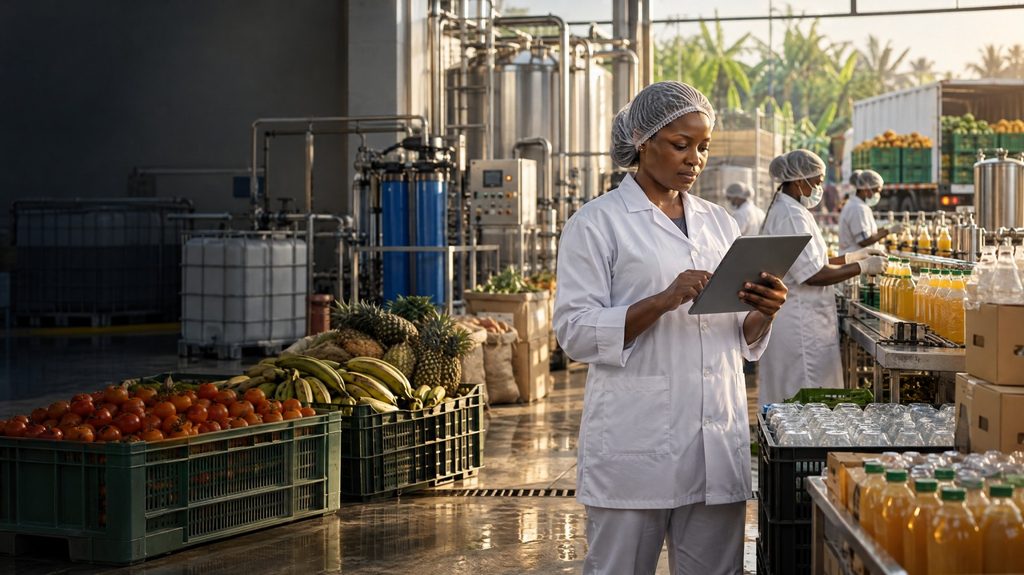
Food and beverage businesses face sustainability pressure from multiple directions at once, sourcing, packaging, water use, and spoilage, often simultaneously. For a Nigerian food and beverage business, a Quick Scan surfaces a specific set of patterns tied to these overlapping pressures, distinct from what a retail shop or a factory would face on its own.
Why Food and Beverage Looks Different From Other Sectors
Few sectors combine agricultural sourcing, industrial processing, and retail-style packaging the way food and beverage businesses do. A single product might involve raw ingredient sourcing, water-intensive processing, and consumer-facing packaging all within one operation. Because of this, a Quick Scan for food and beverage asks about areas that rarely overlap this directly elsewhere: ingredient sourcing practices, water use during processing, packaging volume, and the handling of perishable inventory.
What the Questions Actually Look Like
A Quick Scan for food and beverage typically probes areas specific to this combined exposure. This includes how ingredient suppliers are selected, and whether sourcing considers anything beyond price and availability. It also covers water use during processing and cleaning, since food production often requires more water than businesses initially account for. Packaging gets examined closely too, given how much single-use material moves through food and beverage operations daily. Finally, it looks at spoilage and inventory handling, since perishable goods create a waste pattern most other sectors simply do not have to manage.
None of these questions require a food scientist. They require honest input from whoever manages daily production or kitchen operations.
What the Results Usually Reveal
A few patterns show up consistently in food and beverage Quick Scans. Ingredient sourcing is almost always selected on price and availability alone, with supplier practices rarely considered as a factor. Water use during processing frequently runs higher than businesses assume, since cleaning and sanitation steps add up in ways that are easy to overlook day to day. Packaging volume tends to be underestimated until measured directly, and spoilage is often treated as an unavoidable cost rather than something trackable through better inventory practices.
Why This Starting Point Matters
A Quick Scan does not resolve any of this by itself. It is self-reported and diagnostic, not a certified or independently reviewed assessment. What it provides is a documented, specific starting point, replacing a general sense that “we probably waste some food and water” with an honest, structured picture of where and how much.
Getting Started
If your food and beverage business has never looked closely at sourcing, water use, packaging, or spoilage, a Quick Scan is built to surface exactly those gaps quickly. You can run one at naturesynth.com.