
Sustainability Starts at Home: Practical Steps for Nigerian Households
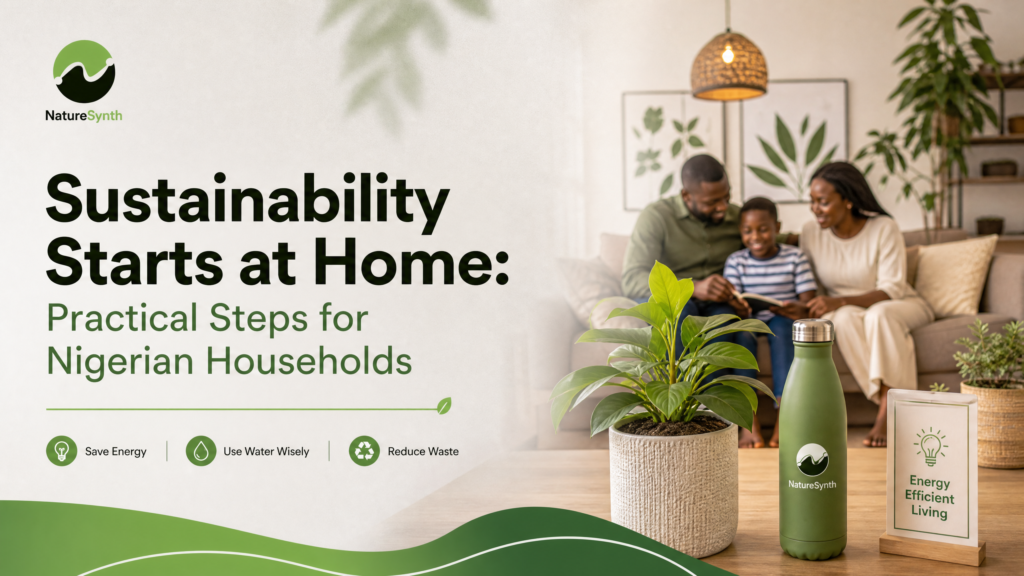
When people hear the word sustainability, they often think of large corporations, international climate conferences, or government policies.
However, sustainability is not limited to boardrooms and global initiatives. In reality, some of the most meaningful actions begin at home.
Every day, Nigerian households make decisions that affect resource consumption, waste generation, energy use, and environmental health. Although individual actions may seem small, their collective impact can be significant.
Therefore, sustainable living Nigeria should not be viewed as an abstract concept. Instead, it should be seen as a practical approach to improving daily life while protecting resources for future generations.
The good news is that sustainability does not always require major investments. In many cases, simple habits can make a noticeable difference.
What Does Sustainable Living Mean?
Sustainable living involves using resources responsibly in ways that meet present needs without compromising the ability of future generations to meet theirs.
This includes how people consume water, electricity, food, and household products.
Additionally, sustainable living encourages reducing waste, conserving resources, and making choices that support environmental well-being.
For Nigerian households, sustainability is often connected to everyday realities such as rising living costs, energy challenges, and waste management concerns.
Consequently, adopting sustainable practices can benefit both families and the environment.
Why Sustainability Matters in Nigerian Homes
Nigeria faces several environmental challenges.
Rapid urbanisation, inadequate waste management systems, flooding, plastic pollution, and energy shortages affect many communities.
Meanwhile, increasing household expenses continue to place pressure on families.
As a result, sustainable practices offer an opportunity to address multiple challenges simultaneously.
By reducing waste and using resources more efficiently, households can lower costs while contributing to environmental protection.
Furthermore, sustainable habits help create healthier living environments.
Reduce Household Waste
Waste management remains a significant challenge in many parts of Nigeria.
Plastic bottles, food waste, sachet packaging, and disposable materials often end up in drainage systems, vacant plots, and waterways.
Therefore, reducing waste should be a priority.
Households can begin by purchasing only what they need. Additionally, reusable bags, containers, and bottles can help reduce dependence on single-use plastics.
Food waste can also be minimised through proper meal planning.
Although these actions may seem simple, they can significantly reduce household waste over time.
Use Energy More Efficiently
Electricity remains a valuable and often limited resource.
Consequently, efficient energy use benefits both households and the environment.
Simple actions can make a difference.
For example:
- Switch off lights when they are not needed.
- Unplug appliances that are not in use.
- Use energy-efficient bulbs.
- Maximise natural lighting during the day.
- Maintain electrical appliances properly.
These practices help reduce energy consumption while lowering electricity expenses.
Moreover, households that rely on generators can reduce fuel costs through efficient energy management.
Conserve Water
Water is essential for daily life.
Nevertheless, it is frequently wasted through avoidable practices.
Leaking taps, overflowing storage tanks, and excessive water usage can increase household consumption unnecessarily.
Therefore, families should monitor water use carefully.
Collecting rainwater for appropriate purposes may also provide additional benefits in some areas.
Furthermore, repairing leaks promptly helps prevent long-term waste.
Water conservation not only supports sustainability but can also reduce household costs.
Make Smarter Shopping Decisions
Sustainability often begins before products enter the home.
Consumers influence environmental outcomes through their purchasing choices.
For instance, buying durable products can reduce the need for frequent replacements.
Similarly, selecting reusable items instead of disposable alternatives helps minimise waste.
Local products may also reduce transportation-related environmental impacts.
Consequently, thoughtful purchasing decisions support both economic and environmental sustainability.
Manage Food Responsibly
Food waste remains a major issue globally, including in Nigeria.
Unfortunately, significant amounts of food are discarded while many people continue to experience food insecurity.
Therefore, responsible food management is important.
Meal planning can help households purchase appropriate quantities.
Proper food storage also reduces spoilage.
Additionally, leftovers can often be reused creatively rather than discarded.
These practices support sustainable living Nigeria while helping families maximise the value of their food budgets.
Keep Communities Clean
Sustainability extends beyond individual households.
Neighbourhood environments also influence quality of life.
Improper waste disposal contributes to blocked drainage systems, flooding, and public health concerns.
As a result, households should dispose of waste responsibly.
Participating in community sanitation efforts can also create positive environmental outcomes.
Furthermore, encouraging children to develop good environmental habits helps strengthen long-term sustainability awareness.
Teach Sustainability to the Next Generation
Children play an important role in shaping the future.
Therefore, environmental responsibility should be introduced early.
Simple lessons can have lasting effects.
For example, children can learn about reducing waste, conserving water, and caring for their surroundings.
Additionally, involving them in sustainable household activities helps reinforce positive habits.
Over time, these behaviours become part of everyday life.
Small Actions Create Meaningful Impact
Many people assume that sustainability requires large-scale interventions.
However, meaningful change often begins with small, consistent actions.
One household reducing waste may seem insignificant.
Nevertheless, when thousands of households adopt similar practices, the collective impact becomes substantial.
Therefore, sustainable living Nigeria should be viewed as a shared responsibility.
Every action contributes to a healthier environment and a more sustainable future.
Where NatureSynth Fits
Promoting sustainability requires awareness, visibility, and informed decision-making.
NatureSynth supports organisations and communities by providing insights that help identify opportunities to improve resource efficiency, reduce waste, and strengthen sustainability outcomes.
As a result, sustainability becomes more practical, measurable, and achievable.
Whether at the organisational or community level, better information supports better environmental decisions.
Conclusion
Sustainability does not begin with large corporations or government policies alone.
It begins with everyday choices made in homes across Nigeria.
By reducing waste, conserving energy, managing water responsibly, and adopting smarter consumption habits, households can make a positive difference.
Furthermore, these practices often improve financial efficiency and quality of life.
Ultimately, sustainable living Nigeria is not about perfection.
Instead, it is about making practical choices that protect resources, strengthen communities, and support a more sustainable future.
Next Step
Take a moment to evaluate your household habits.
Which resources are used most frequently?
Where does unnecessary waste occur?
What small changes could be implemented this week?
The answers may reveal simple opportunities to embrace sustainable living Nigeria while creating lasting benefits for both your family and the environment.