
The Cost of Food Waste in Nigeria: An Overlooked Sustainability Challenge
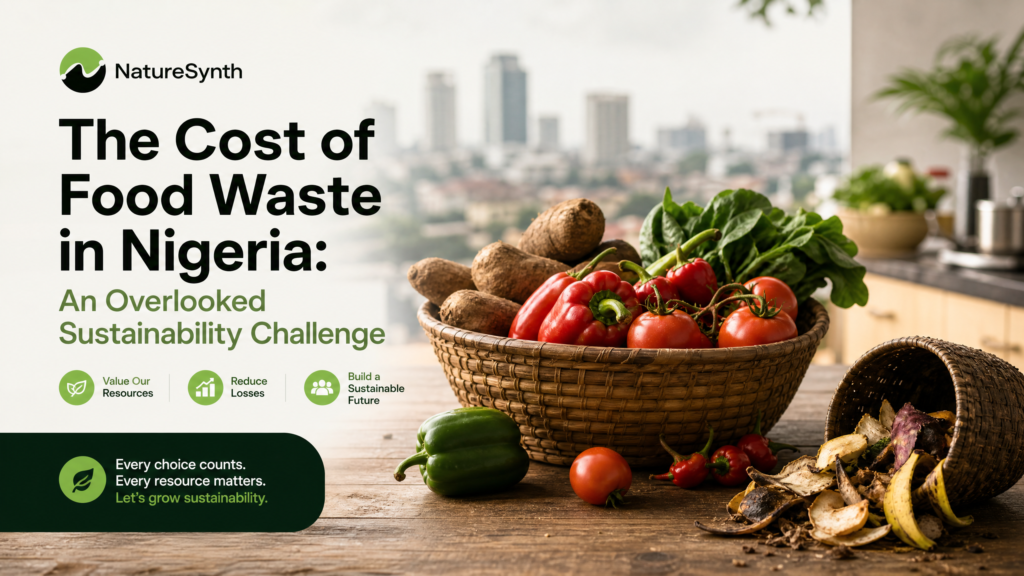
Food is one of the most valuable resources in any society.
It nourishes families, supports livelihoods, and contributes to economic growth. Yet, despite its importance, a significant amount of food is wasted every day.
This reality is particularly concerning in Nigeria, where food insecurity remains a challenge for many households. While millions of people struggle to access adequate nutrition, large quantities of food are lost or discarded throughout the supply chain.
Therefore, food waste Nigeria is not merely an economic issue. It is also a sustainability challenge with environmental, social, and financial consequences.
Addressing this problem requires greater awareness, better resource management, and practical actions at every level of society.
Understanding Food Waste in Nigeria
Food waste refers to food that is suitable for consumption but is lost, discarded, or allowed to spoil before it can be eaten.
In Nigeria, food waste occurs at multiple stages.
Some losses happen during harvesting and transportation. Meanwhile, additional waste occurs in markets, restaurants, and households.
Consequently, food that required land, water, energy, labour, and financial resources to produce never fulfills its intended purpose.
This creates a cycle of inefficiency that affects both people and the environment.
Food Waste Begins Before Food Reaches Consumers
Many people assume food waste happens primarily in homes.
However, significant losses often occur much earlier.
Farmers frequently face challenges related to inadequate storage facilities, poor transportation infrastructure, and limited access to modern preservation technologies.
As a result, fruits, vegetables, grains, and other agricultural products may spoil before reaching consumers.
Furthermore, delays in transportation can increase post-harvest losses.
Consequently, food waste Nigeria begins long before meals reach household tables.
Household Food Waste Is More Common Than Many Realise
Food waste also occurs in homes across the country.
Sometimes households purchase more food than they can consume.
In other cases, leftovers are forgotten, poorly stored, or discarded unnecessarily.
Additionally, irregular electricity supply can contribute to food spoilage, particularly for perishable items.
Therefore, everyday household habits can significantly influence food waste levels.
Although individual losses may appear small, their collective impact becomes substantial when multiplied across millions of households.
The Environmental Impact of Food Waste
Food waste affects more than household budgets.
Its environmental consequences are equally significant.
Producing food requires natural resources such as land, water, and energy. When food is wasted, those resources are effectively wasted as well.
Furthermore, decomposing food generates greenhouse gases that contribute to climate-related challenges.
As a result, reducing food waste Nigeria can help conserve valuable resources while supporting environmental sustainability.
This connection highlights why food waste should be viewed as both an economic and environmental issue.
Food Waste and Food Insecurity Are Closely Linked
One of the most troubling aspects of food waste is its relationship with food insecurity.
Many Nigerian households face rising food prices and limited access to nutritious meals.
Meanwhile, edible food continues to be lost or discarded.
Although reducing waste alone will not solve food insecurity, it can improve overall resource efficiency.
Moreover, minimising food losses helps ensure that more food reaches consumers instead of ending up as waste.
Consequently, efforts to reduce food waste Nigeria can support broader food security goals.
The Financial Cost Often Goes Unnoticed
Food waste directly affects household finances.
Every item that spoils before it is consumed represents money that has been lost.
Likewise, businesses within the food supply chain experience financial losses when products cannot be sold.
Over time, these costs accumulate.
For households already managing rising living expenses, reducing food waste can provide meaningful savings.
Similarly, businesses can improve profitability by minimising avoidable losses.
Therefore, reducing food waste is not only environmentally responsible but also financially beneficial.
Practical Ways Nigerian Households Can Reduce Food Waste
Fortunately, reducing food waste does not require complex solutions.
Several practical actions can make a difference.
Households can:
- Plan meals before shopping.
- Purchase quantities that match actual needs.
- Store food properly.
- Use older food items before newer purchases.
- Repurpose leftovers creatively.
- Monitor expiration dates.
- Share surplus food when possible.
Additionally, greater awareness about food preservation can help households maximise the value of their purchases.
As a result, families can reduce waste while lowering expenses.
Businesses and Communities Have a Role to Play
Addressing food waste requires collective action.
Businesses can improve storage practices, strengthen inventory management, and invest in technologies that reduce spoilage.
Meanwhile, markets can adopt better handling procedures.
Communities also play an important role through education and awareness initiatives.
Furthermore, partnerships between stakeholders can help identify innovative solutions to reduce losses throughout the food supply chain.
Consequently, progress becomes more achievable when multiple sectors work together.
Food Waste Reduction Supports Sustainable Living
Sustainability is often associated with large-scale environmental initiatives.
However, reducing food waste demonstrates how sustainability can begin with everyday decisions.
Each meal saved from being discarded helps conserve resources.
Likewise, every effort to reduce unnecessary waste contributes to a more efficient and sustainable society.
Therefore, tackling food waste Nigeria represents an opportunity to strengthen environmental responsibility while improving household and community outcomes.
Where NatureSynth Fits
Understanding sustainability challenges requires visibility and informed decision-making.
NatureSynth supports organisations and communities by providing insights that help identify inefficiencies, optimise resource use, and strengthen sustainability outcomes.
As a result, stakeholders can better understand patterns of waste and uncover opportunities for improvement.
Better information ultimately supports more sustainable choices.
Conclusion
Food waste is often overlooked because its effects are dispersed across households, businesses, farms, and communities.
Nevertheless, its cumulative impact is significant.
Food waste Nigeria affects food security, household finances, environmental sustainability, and resource efficiency.
Therefore, reducing waste should become a shared priority.
Small actions taken consistently can generate meaningful results.
Ultimately, a more sustainable future depends not only on producing enough food but also on using available resources responsibly.
Next Step
Take a closer look at your household’s food habits.
How much food is discarded each week?
Which items spoil most frequently?
What simple changes could reduce waste?
The answers may reveal practical opportunities to save money, conserve resources, and contribute to a more sustainable Nigeria.