
Why Employee Well-Being Is a Business Strategy, Not Just an HR Responsibility
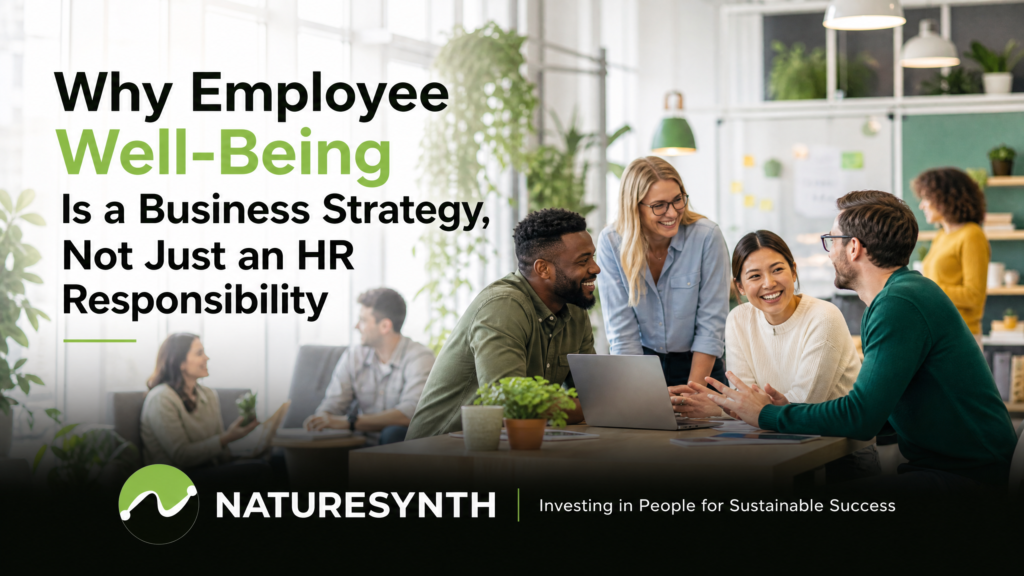
For many organisations, employee well-being is often viewed as a responsibility that belongs solely to the Human Resources department. Wellness programmes, staff engagement activities, and workplace benefits are frequently treated as separate initiatives rather than integral parts of business strategy.
However, this perspective is changing.
Forward-thinking organisations now recognise that employee well-being directly influences productivity, innovation, customer satisfaction, and long-term business performance. Businesses cannot achieve sustainable growth without a healthy, engaged, and motivated workforce.
Consequently, employee well-being has become a strategic priority rather than simply an HR function.
People Are Every Organisation’s Greatest Asset
Every successful organisation depends on its people.
Technology, infrastructure, and financial resources are important, but employees remain the driving force behind innovation, customer service, operational excellence, and business growth.
When employees feel valued and supported, they are more likely to perform at their best.
Conversely, workplaces characterised by excessive stress, poor communication, and limited support often experience declining productivity and increased turnover.
Therefore, investing in people is an investment in business success.
Well-Being Improves Productivity
Productivity is not determined only by skills or experience.
It is also influenced by physical health, mental well-being, workplace relationships, and job satisfaction.
Employees who work in supportive environments are generally more focused, motivated, and committed to achieving organisational goals.
Furthermore, organisations that prioritise employee well-being often experience fewer workplace disruptions and stronger overall performance.
As a result, well-being contributes directly to operational efficiency.
Retaining Talent Is More Cost-Effective Than Replacing It
Recruiting and training new employees requires significant time and financial investment.
When experienced employees leave because of poor working conditions or burnout, organisations lose valuable knowledge and continuity.
Creating a workplace where employees feel respected, heard, and supported helps improve retention.
Additionally, stable teams often collaborate more effectively and deliver better results.
Consequently, employee well-being reduces turnover while strengthening organisational resilience.
Innovation Thrives in Healthy Workplaces
Innovation depends on people who are willing to share ideas, solve problems, and embrace change.
Employees are more likely to contribute creatively when they feel psychologically safe and valued.
Organisations that encourage collaboration, continuous learning, and open communication create environments where innovation can flourish.
Therefore, workplace well-being supports both creativity and long-term competitiveness.
Employee Experience Influences Customer Experience
Satisfied employees often deliver better customer experiences.
Positive workplace cultures encourage professionalism, responsiveness, and stronger customer relationships.
On the other hand, disengaged employees may struggle to provide consistent service.
Because customers interact directly with employees, workplace culture inevitably influences brand perception.
Consequently, investing in employee well-being also strengthens customer trust.
Leadership Plays a Critical Role
Employee well-being cannot succeed without leadership commitment.
Business leaders shape workplace culture through their decisions, communication, and behaviour.
Transparent leadership, fair policies, recognition, and opportunities for professional growth all contribute to healthier workplaces.
When leaders demonstrate genuine concern for employee well-being, trust and engagement naturally increase.
Therefore, well-being should be championed throughout the organisation, not delegated exclusively to HR.
Practical Ways Businesses Can Support Employee Well-Being
Improving workplace well-being does not always require significant financial investment.
Businesses can begin by:
- Encouraging open communication.
- Providing opportunities for learning and development.
- Recognising employee contributions.
- Promoting work-life balance.
- Maintaining safe and respectful workplaces.
- Supporting physical and mental health.
- Listening to employee feedback regularly.
Although these actions may seem simple, they create meaningful long-term improvements.
Where NatureSynth Fits
Building sustainable organisations requires balancing business performance with people, governance, and environmental responsibility.
NatureSynth helps organisations use sustainability insights to strengthen workplace practices, improve operational performance, and support informed decision-making.
By transforming sustainability data into practical intelligence, NatureSynth enables businesses to create healthier workplaces while strengthening long-term resilience and business success.
As a result, employee well-being becomes part of a broader sustainability strategy rather than an isolated initiative.
Conclusion
Businesses often invest heavily in technology, equipment, and infrastructure.
However, sustainable success ultimately depends on people.
When organisations prioritise employee well-being, they improve productivity, strengthen workplace culture, retain valuable talent, and enhance customer satisfaction.
Employee well-being is not simply an HR responsibility.
It is a business strategy that supports resilience, innovation, and long-term value creation.
The organisations that invest in their people today will be better positioned to succeed tomorrow.
Next Step
Ask yourself one important question:
If your employees are your greatest asset, are you investing in them with the same commitment you give to every other part of your business?
The answer may determine the future strength of your organisation.