
How SMEs Can Build a Sustainability Strategy Without a Big Budget
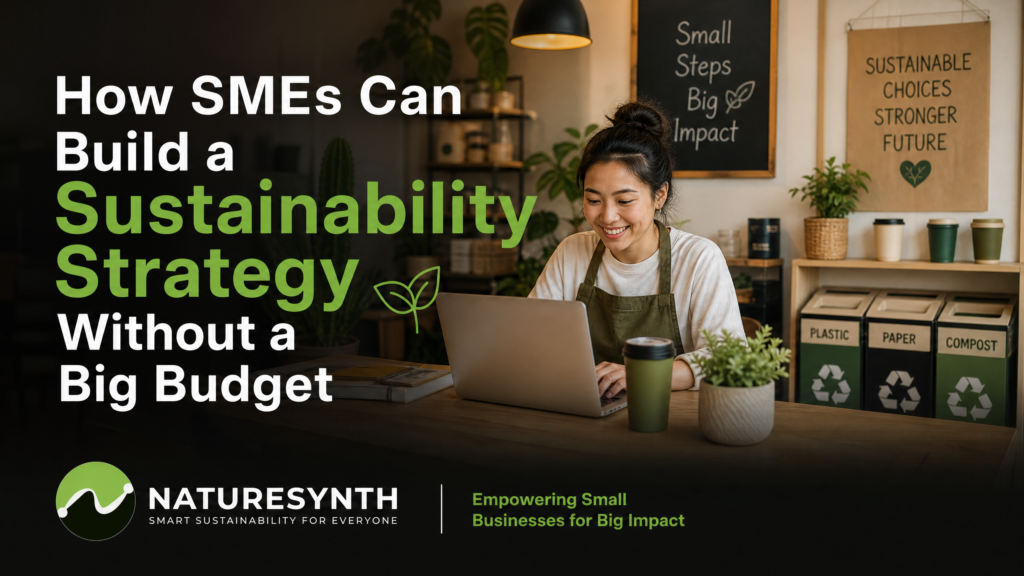
Sustainability is often associated with large corporations that have dedicated ESG teams, extensive reporting systems, and significant financial resources. Consequently, many small and medium-sized enterprises (SMEs) assume that sustainability is beyond their reach.
That assumption could not be further from the truth.
In reality, SME sustainability is not about how much money a business spends. It is about making smarter decisions that reduce waste, improve efficiency, strengthen resilience, and create long-term value.
For SMEs, sustainability should not be viewed as an additional expense. Instead, it should be seen as a practical business strategy that supports growth and competitiveness.
Sustainability Starts with Better Business Decisions
Many business owners believe sustainability requires major investments in new technology or infrastructure.
However, sustainable businesses often begin with simple operational improvements.
Reducing unnecessary energy consumption, improving inventory management, minimising waste, and using resources more efficiently are all examples of sustainability in action.
Although these changes may appear small, they often reduce operating costs while improving business performance.
Therefore, sustainability begins with everyday decisions rather than expensive projects.
Understand Where Your Business Stands
Every sustainability journey starts with understanding the current situation.
Business owners should ask practical questions such as:
- Where are we wasting resources?
- Which activities increase operating costs unnecessarily?
- How much energy and water do we consume?
- Are our suppliers reliable and responsible?
- How can we improve our day-to-day operations?
By answering these questions, SMEs can identify opportunities that deliver both financial and sustainability benefits.
Focus on Efficiency Before Expansion
Many businesses pursue growth without first improving efficiency.
As a result, they often increase costs alongside revenue.
A more sustainable approach is to strengthen existing operations before expanding.
Improving workflows, reducing material waste, optimising deliveries, and using equipment efficiently can significantly improve profitability.
Consequently, businesses become stronger before taking on additional growth.
Build a Responsible Workplace
People remain one of every SME’s greatest assets.
Employees perform better when they work in safe, respectful, and supportive environments.
Providing opportunities for learning, encouraging open communication, and recognising employee contributions all strengthen workplace culture.
Furthermore, businesses with engaged employees often experience lower staff turnover and higher productivity.
Therefore, investing in people is an important part of SME sustainability.
Choose Suppliers Carefully
Every supplier influences business performance.
Although price is an important consideration, reliability, quality, and ethical business practices are equally valuable.
Working with dependable suppliers reduces disruptions and strengthens customer confidence.
Moreover, long-term supplier relationships often improve collaboration and operational stability.
Consequently, responsible sourcing becomes a competitive advantage rather than simply a procurement decision.
Measure What Matters
Businesses cannot improve what they do not measure.
Fortunately, SMEs do not need complex reporting systems to begin monitoring sustainability.
Simple indicators such as electricity usage, water consumption, waste generation, fuel costs, customer satisfaction, and employee retention provide valuable insights.
Tracking these metrics regularly enables business owners to identify trends and make informed decisions.
As a result, sustainability becomes measurable and manageable.
Communicate Your Commitment
Customers increasingly value businesses that operate responsibly.
SMEs should communicate genuine sustainability efforts through their websites, social media platforms, and customer interactions.
However, honesty is essential.
Businesses should focus on real improvements rather than exaggerated claims.
Authentic communication builds trust and strengthens brand reputation over time.
Make Sustainability Part of Your Business Strategy
Sustainability should not exist as a separate project.
Instead, it should influence everyday decisions across the organisation.
Whether purchasing equipment, selecting suppliers, hiring employees, or planning expansion, sustainability should form part of the decision-making process.
When this happens, businesses become more resilient, efficient, and adaptable.
Where NatureSynth Fits
Building a sustainable business begins with understanding performance.
NatureSynth helps SMEs transform sustainability data into practical insights that support better decision-making, improve operational efficiency, and strengthen long-term resilience.
Rather than relying on assumptions, businesses can use data to identify opportunities, reduce risks, and measure progress.
Consequently, sustainability becomes a practical management tool rather than an abstract concept.
Conclusion
Many SMEs postpone sustainability because they believe it requires significant financial investment.
In reality, the most effective sustainability strategies often begin with simple improvements, consistent measurement, and smarter business decisions.
By embracing SME sustainability, businesses can reduce costs, improve efficiency, strengthen customer trust, and position themselves for long-term success.
Ultimately, sustainability is not about the size of a business.
It is about the quality of its decisions.
Next Step
Ask yourself one important question:
What is one small change your business could make this month that would reduce waste, improve efficiency, or create more long-term value?
The answer could be the first step towards building a more sustainable and resilient business.