
Why Employee Well-being Is a Business Sustainability Issue
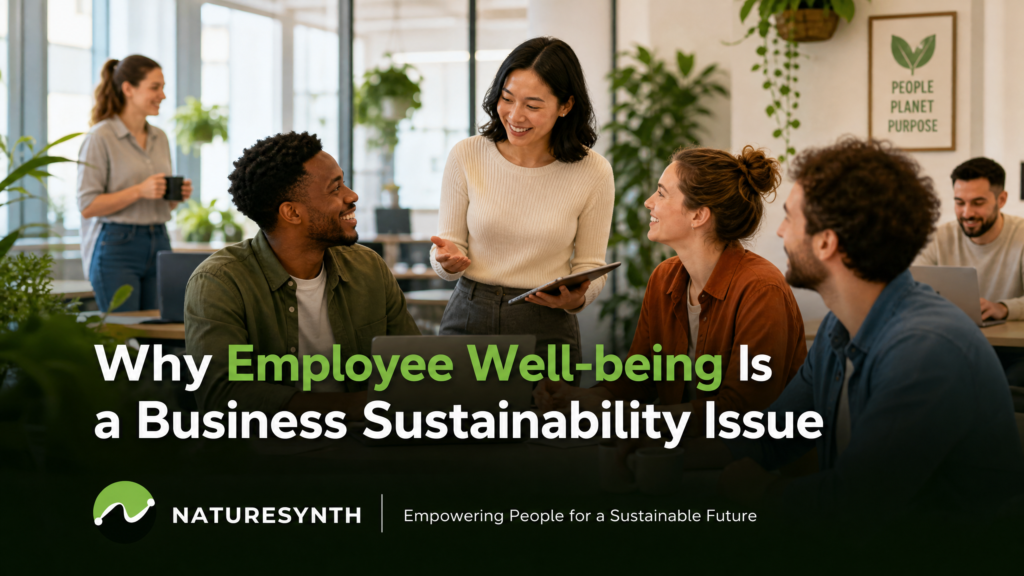
For many organisations, sustainability is often associated with reducing emissions, conserving resources, or improving environmental performance.
While these efforts are important, sustainability is also about people.
Employees are the driving force behind every successful organisation. They develop ideas, serve customers, solve problems, and keep businesses moving forward. Consequently, organisations that overlook employee well-being may struggle to achieve long-term success, regardless of their financial performance.
Therefore, employee wellbeing should be recognised as a strategic business priority rather than an optional workplace benefit.
What Is Employee Well-being?
Employee well-being refers to the overall physical, mental, emotional, and social health of people at work.
It goes beyond salaries and benefits.
A healthy workplace provides employees with safe working conditions, opportunities for growth, respect, fair treatment, and a positive organisational culture.
Additionally, employees should feel supported, valued, and able to perform their responsibilities effectively.
When organisations invest in their people, they create stronger foundations for sustainable growth.
Why Employee Well-being Matters
People perform at their best when they feel healthy, motivated, and respected.
Conversely, excessive workloads, unsafe working conditions, workplace conflict, and poor leadership can reduce morale and productivity.
Over time, these challenges may lead to burnout, absenteeism, and higher staff turnover.
As a result, organisations often spend more time and resources replacing employees instead of developing them.
Strong employee wellbeing practices help businesses avoid these challenges while building more engaged teams.
Well-being Improves Productivity
Healthy employees are generally more focused and productive.
They are also more likely to collaborate effectively, solve problems creatively, and contribute innovative ideas.
Furthermore, employees who feel appreciated often demonstrate stronger commitment to organisational goals.
Consequently, investing in well-being is not simply an act of compassion. It is also a practical business decision that supports performance.
Mental Health Deserves Greater Attention
Mental health is an important part of workplace well-being.
Stress, anxiety, and emotional exhaustion can affect employees across every industry.
Although conversations around mental health have become more common, many employees still hesitate to seek support.
Organisations can help by creating environments where employees feel safe discussing workplace challenges.
Additionally, managers should encourage healthy workloads, open communication, and access to appropriate support where possible.
Supporting mental well-being strengthens both individuals and organisations.
Safe and Inclusive Workplaces Benefit Everyone
Employee well-being also depends on workplace safety and inclusion.
Every employee deserves to work in an environment free from discrimination, harassment, and unnecessary risk.
Likewise, organisations should promote fairness, equal opportunities, and respect for diversity.
Inclusive workplaces encourage collaboration while allowing employees to contribute their best ideas.
As a result, businesses become stronger, more innovative, and better prepared for future challenges.
Employee Well-being Supports Business Sustainability
Sustainability is about creating long-term value.
That goal cannot be achieved without a healthy and motivated workforce.
Employees who feel supported are more likely to remain with an organisation, reducing recruitment costs and preserving valuable knowledge.
Moreover, organisations with strong employee wellbeing programmes often strengthen their reputation among customers, investors, and prospective employees.
Therefore, people-focused leadership contributes directly to sustainable business success.
Practical Ways Organisations Can Improve Well-being
Every organisation can take meaningful steps to support employees.
These include:
- Promoting a healthy work-life balance.
- Providing safe and respectful working environments.
- Encouraging open communication between employees and leadership.
- Recognising and rewarding good performance.
- Supporting learning and professional development.
- Addressing workplace concerns promptly and fairly.
- Creating opportunities for employee feedback.
Although these actions require commitment, they often produce lasting benefits for both employees and employers.
Why Employee Well-being Matters in Nigeria
Across Nigeria, businesses operate in a fast-changing and sometimes demanding environment.
Economic pressures, long commuting times, and workplace stress can affect employee performance and morale.
Consequently, organisations that prioritise employee well-being are better positioned to build resilient teams.
Employees who feel respected and supported are also more likely to contribute positively to organisational growth.
Therefore, investing in people is an investment in long-term business sustainability.
Where NatureSynth Fits
Building sustainable organisations requires balancing environmental responsibility with social impact and good governance.
NatureSynth supports organisations by providing sustainability insights that help strengthen ESG performance and improve decision-making.
By encouraging people-centred strategies alongside responsible governance and environmental stewardship, NatureSynth helps organisations build resilience for the future.
As a result, sustainability becomes part of everyday business operations rather than a separate initiative.
Conclusion
Successful businesses are built by people.
Although technology, infrastructure, and financial resources are important, employees remain every organisation’s greatest asset.
When businesses invest in employee wellbeing, they create healthier workplaces, improve productivity, strengthen innovation, and build lasting trust.
Ultimately, sustainability is not only about protecting the environment.
It is also about creating workplaces where people can thrive, contribute, and grow together.
Next Step
Take a moment to evaluate your workplace.
Do employees feel heard?
Are they supported, respected, and given opportunities to succeed?
Small improvements in employee well-being today can create stronger organisations and a more sustainable future for everyone.