
Why Businesses Are Measuring Sustainability Differently Today
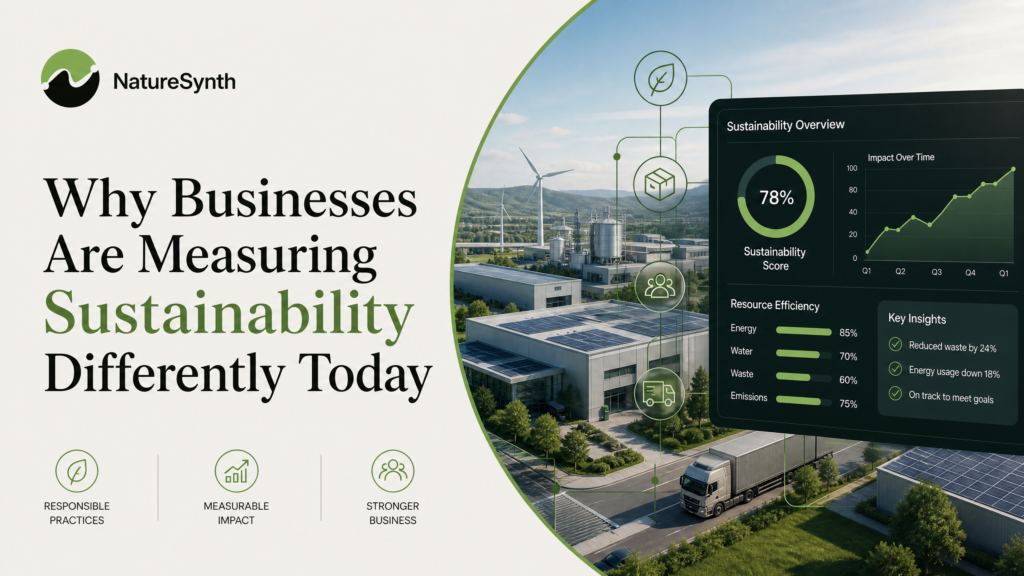
Many business leaders are measuring sustainability differently today because the conversation around sustainability is changing. In the past, companies focused heavily on large promises, long-term goals, and public commitments.
Today, businesses still care about sustainability, but they ask different questions.
Can we reduce waste or improve efficiency? Can we track measurable results or sustainability strengthen business performance?
For many years, sustainability discussions often focused on broad targets.
Businesses announced long-term commitments and ambitious plans. Companies spoke about future goals that stretched years ahead.
These goals created awareness and encouraged action.
However, many businesses eventually discovered a challenge.
Large goals can feel difficult to connect with daily operations.
Employees may struggle to understand how broad commitments affect everyday work.
As a result, businesses began looking for more practical ways to measure progress.
Businesses Now Want Clear and Practical Metrics
Today, businesses increasingly focus on measurable indicators.
Instead of relying only on broad sustainability goals, companies now monitor practical information that directly affects operations.
Businesses often track:
Resource use
Energy consumption
Waste levels
Operational efficiency
Cost savings
Workflow performance
These measurements provide clearer information about what is improving and where problems still exist.
Practical metrics make sustainability easier to understand and manage.
Businesses Improve What They Measure
Measurement creates visibility.
When businesses track performance, they understand where resources are used effectively and where inefficiencies happen.
For example, a business may notice excessive energy use in certain operations. Another company may discover repeated workflow delays that reduce productivity.
Without measurement, businesses often rely on assumptions.
Assumptions rarely reveal hidden problems.
Data helps businesses identify issues earlier and make better decisions.
Sustainability Is Moving Closer to Daily Operations
Sustainability is no longer treated as a separate activity in many organisations.
Businesses increasingly connect sustainability with everyday decisions.
Managers now consider efficiency, resource use, and operational improvements alongside sustainability goals.
This creates a more practical approach.
Businesses no longer focus only on future promises.
They also focus on current performance.
This shift makes sustainability part of normal business operations.
Businesses Want Results They Can See
Many companies now want visible evidence that sustainability efforts create value.
They want to understand whether changes reduce costs, improve efficiency, strengthen systems, or support long-term growth.
This focus on results changes business priorities.
Instead of asking whether sustainability sounds good, businesses increasingly ask whether sustainability works.
That question creates stronger accountability.
Why This Shift Matters
Businesses operate in a changing environment.
Rising costs, supply chain challenges, resource limitations, and increasing competition create pressure on operations.
As a result, companies want sustainability efforts that support real business performance.
Measurement helps businesses respond more effectively.
Clear information supports better planning and stronger decisions.
Where NatureSynth Helps
Many businesses understand the importance of sustainability but struggle to identify what they should track.
NatureSynth helps businesses understand operational patterns, identify inefficiencies, and improve resource use.
Instead of relying on assumptions, businesses gain clearer insights into where practical improvements can happen.
This helps businesses create measurable progress over time.
Conclusion
Businesses are measuring sustainability differently today because expectations are changing.
Companies increasingly value measurable results, practical improvements, and operational performance.
Sustainability is becoming more connected to daily business decisions.
Businesses that understand this shift may build stronger systems and create more sustainable long-term growth.
Next Step
Take a closer look at your business operations.
Ask yourself:
What are we measuring?
What are we improving?
Are we tracking meaningful results?
Better measurement often creates better decisions.