
What a Quick Scan Looks Like for a Nigerian Agribusiness
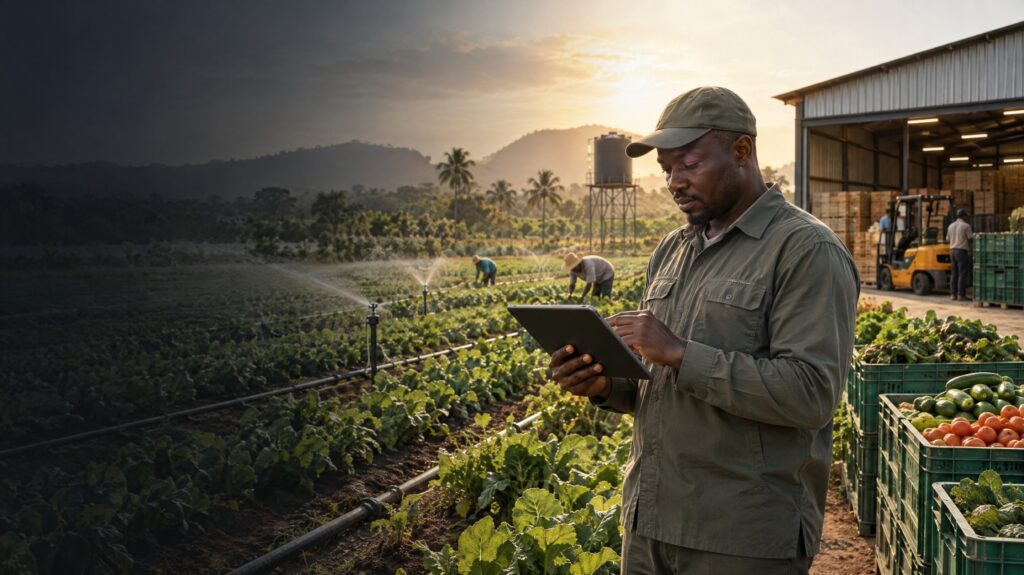
Agriculture carries sustainability exposure unlike almost any other sector, tied directly to land, water, and weather rather than a controlled indoor environment. For a Nigerian agribusiness, a Quick Scan surfaces a distinct set of patterns, ones that rarely show up in the generic sustainability checklists built for office-based businesses.
Why Agribusiness Looks Different From Other Sectors
A farm or agribusiness does not control its environment the way a factory or shop does. Rainfall, soil condition, and seasonal variation directly shape operations in ways no other sector deals with as intensely. Because of this, a Quick Scan for agribusiness asks about areas that simply do not apply elsewhere: water use tied to irrigation, storage conditions that determine how much of a harvest survives to market, and land management practices that affect long-term productivity, not just this season’s yield.
What the Questions Actually Look Like
A Quick Scan for agribusiness typically probes areas specific to agricultural operations. This includes how irrigation water use is tracked, particularly during dry season when demand peaks. It also covers post-harvest storage and handling, since losses here often happen quietly between harvest and sale rather than during production itself. Land management practices get examined too, specifically whether soil health is monitored over time or simply assumed to remain constant. Finally, it looks at supply chain relationships, since many agribusinesses sell through intermediaries whose own practices rarely get questioned.
None of these questions require a specialist background. They require someone who understands daily farm or processing operations, often the farm manager rather than an outside consultant.
What the Results Usually Reveal
A few patterns show up repeatedly in agribusiness Quick Scans. Post-harvest losses are consistently underestimated until measured directly, since spoilage during storage and transport often gets written off as an unavoidable cost of doing business rather than something trackable and reducible. Irrigation water use frequently runs inefficiently, not from waste exactly, but from systems that were never evaluated after initial setup. Land management often reveals a gap between assumed and actual soil health, since the slow nature of soil degradation makes it easy to overlook year to year.
Why This Starting Point Matters
A Quick Scan does not resolve any of this by itself. It is self-reported and diagnostic, not a certified or independently reviewed assessment. What it offers is a documented, specific starting point, replacing a general sense that “we lose some harvest every year” with an honest, structured picture of where and why.
Getting Started
If your agribusiness has never looked closely at post-harvest loss, irrigation efficiency, or land management, a Quick Scan is built to surface exactly those gaps quickly. You can run one at naturesynth.com.