
How to Spot Greenwashing: A Practical Guide
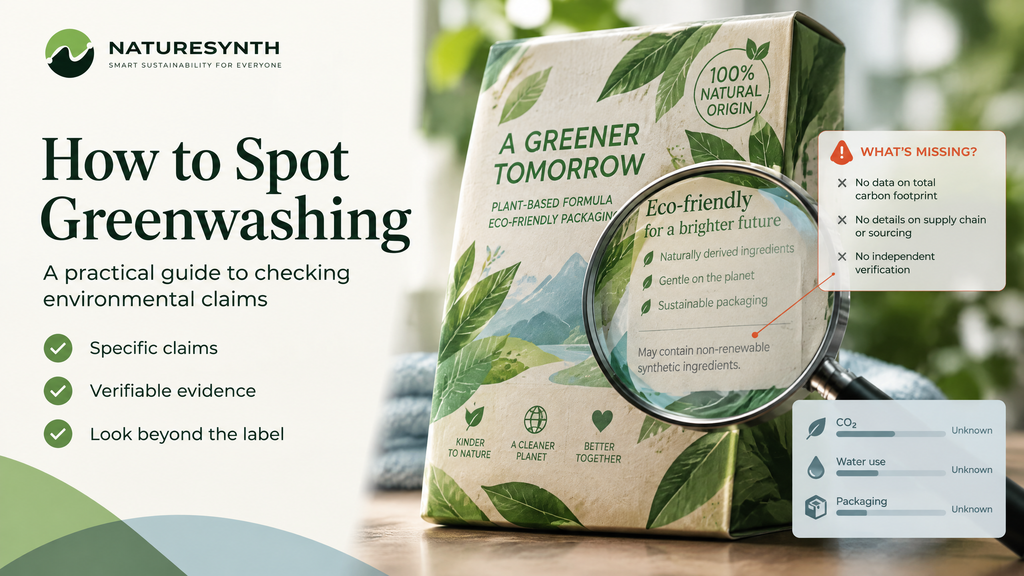
Green marketing has become common enough that most consumers can no longer tell which claims are genuine and which ones exist purely to sound good. Greenwashing describes exactly this problem: when a company exaggerates, misrepresents, or fabricates its environmental credentials. Learning how to spot greenwashing protects your money, your trust, and your ability to make informed decisions as a consumer, investor, or business partner.
What Greenwashing Actually Looks Like
Greenwashing rarely announces itself directly. Instead, it hides behind vague language, selective disclosure, and imagery designed to create an impression rather than convey a fact. A product labeled “eco-friendly” with no explanation of what that means is a common example. So is a company highlighting one small sustainable initiative while ignoring far larger environmental impacts elsewhere in its operations.
According to the Federal Trade Commission’s Green Guides, the official U.S. guidance on environmental marketing claims, businesses must be able to substantiate any environmental claim they make. However, enforcement has limits, and many vague claims slip through simply because they are difficult to disprove outright.
Warning Signs Worth Watching For
Vague or Unverifiable Language
Terms like “green,” “natural,” or “eco-conscious” carry no fixed, regulated meaning in most contexts. Because of this, they function more as marketing color than factual claims. A specific, measurable statement, such as a stated percentage reduction in emissions, carries far more weight than a vague adjective.
Irrelevant Claims
Sometimes a claim is technically true but practically meaningless. A product advertised as “CFC-free,” for example, sounds environmentally responsible. However, CFCs have been banned for decades, so the claim provides no real information about the product’s actual environmental impact.
Hidden Trade-offs
A product marketed as sustainable in one narrow respect, energy-efficient, for example, may still carry significant environmental costs elsewhere in its production or disposal. Highlighting one positive attribute while ignoring larger negative ones is a common greenwashing pattern.
No Verifiable Evidence
Genuine sustainability claims can usually be traced back to specific data, certifications, or third-party verification. If a claim cannot be checked against anything concrete, that absence itself is worth treating as a red flag.
Why This Matters Beyond Individual Purchases
Greenwashing does more than mislead individual consumers. It erodes trust in the broader idea of sustainable business, making it harder for companies with genuine, verified practices to stand out. As a result, learning how to spot greenwashing benefits the businesses doing real work just as much as it protects the people evaluating their claims.
A Simple Test to Apply
Before trusting an environmental claim, ask whether it is specific, whether it can be verified independently, and whether it reflects the business’s overall impact rather than one isolated detail. Claims that fail all three tests deserve skepticism, regardless of how convincing the marketing sounds.
You can find more general sustainability and climate resources at naturesynth.com.