
Scope 1, 2, and 3 Emissions Explained in Plain Language
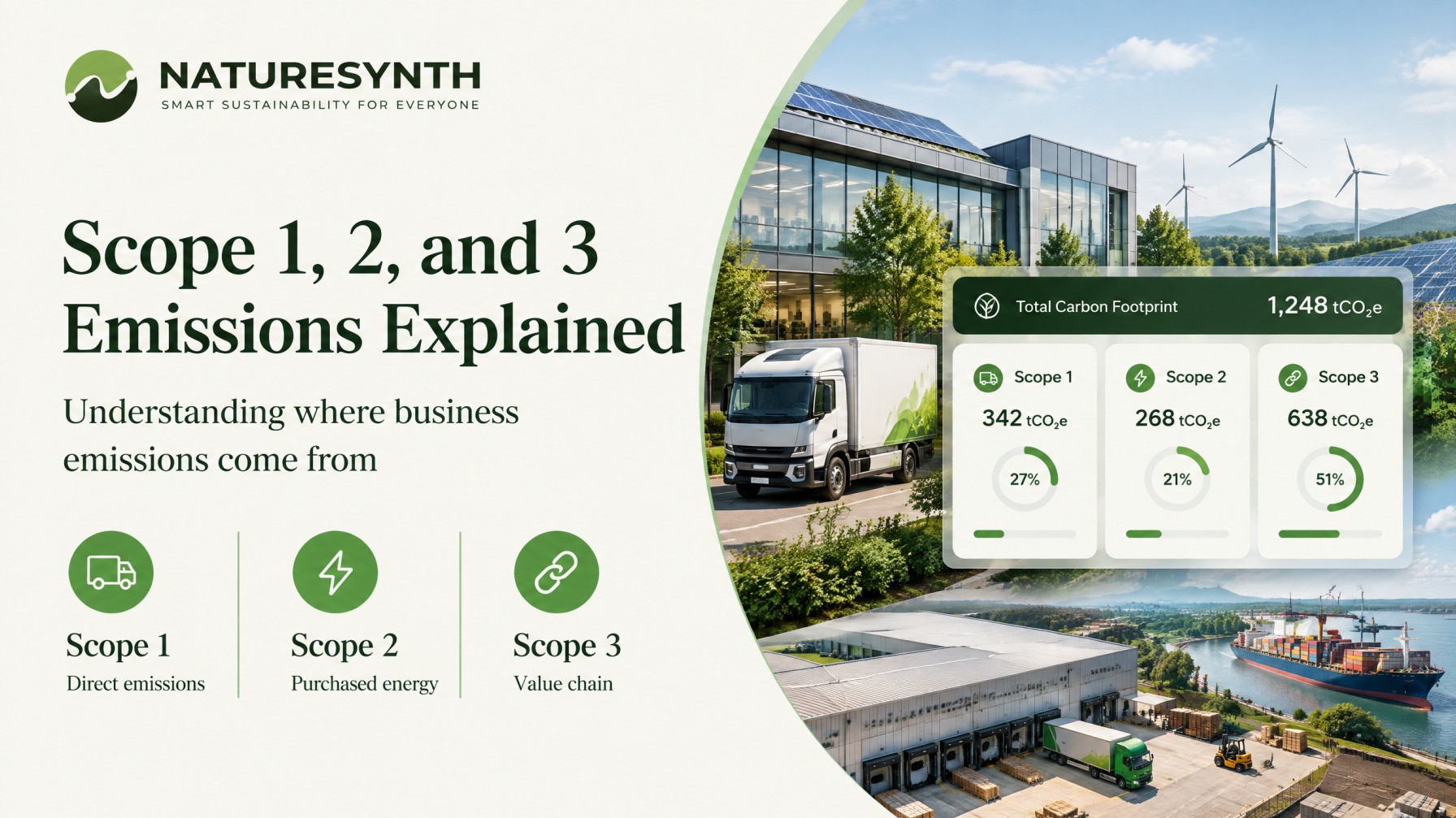
Scope 1, 2, and 3 emissions sound technical, but the idea behind them is simple. They are a way of sorting a business’s greenhouse gas emissions by where those emissions actually come from. Understanding the difference matters because each scope points toward a different kind of action, and confusing them often leads businesses to measure the wrong thing first.
Where This Classification Comes From
The scope system comes from the GHG Protocol Corporate Accounting and Reporting Standard, the most widely used framework for measuring corporate greenhouse gas emissions. It splits emissions into three categories specifically to avoid double-counting and to make responsibility clearer across a business’s operations and supply chain.
Scope 1: Direct Emissions
Scope 1 emissions come directly from sources a business owns or controls. This includes fuel burned in company vehicles, emissions from on-site boilers or furnaces, and leaks from refrigeration or air conditioning equipment. Because these emissions happen on-site or through owned assets, they are usually the easiest category for a business to measure and act on directly.
Scope 2: Indirect Energy Emissions
Scope 2 emissions come from purchased electricity, steam, heat, or cooling. A business does not generate these emissions on-site. However, its energy consumption drives the emissions produced wherever that energy was generated. In other words, switching to a cleaner energy source, or simply using less energy, directly reduces this scope.
Scope 3: Everything Else in the Value Chain
Scope 3 emissions cover indirect emissions throughout a business’s broader value chain, both upstream and downstream. This includes emissions from purchased goods and services, business travel, employee commuting, and even how customers use or dispose of a product after purchase. Because Scope 3 spans an entire supply chain rather than a single business, it is typically the largest category by volume and the hardest to measure accurately.
Why the Difference Actually Matters
A business that only tracks Scope 1 emissions can end up with a misleading picture of its total climate impact, especially if most of its footprint sits in purchased energy or its supply chain. As a result, credible sustainability reporting increasingly expects businesses to account for all three scopes, not just the most convenient one to measure.
This distinction also shapes where improvement efforts should start. A business with high Scope 1 emissions might prioritize fleet efficiency or on-site equipment upgrades. Meanwhile, a business with high Scope 2 emissions might focus on renewable energy sourcing. Scope 3 improvements often require working directly with suppliers and partners, since the emissions originate outside the business’s direct control.
Getting Started
Understanding which scope carries the most weight for your specific operations is the first real step toward meaningful emissions tracking. You can find more general sustainability and climate resources at naturesynth.com.