
How Rising Fuel Costs Are Quietly Affecting Nigerian Businesses
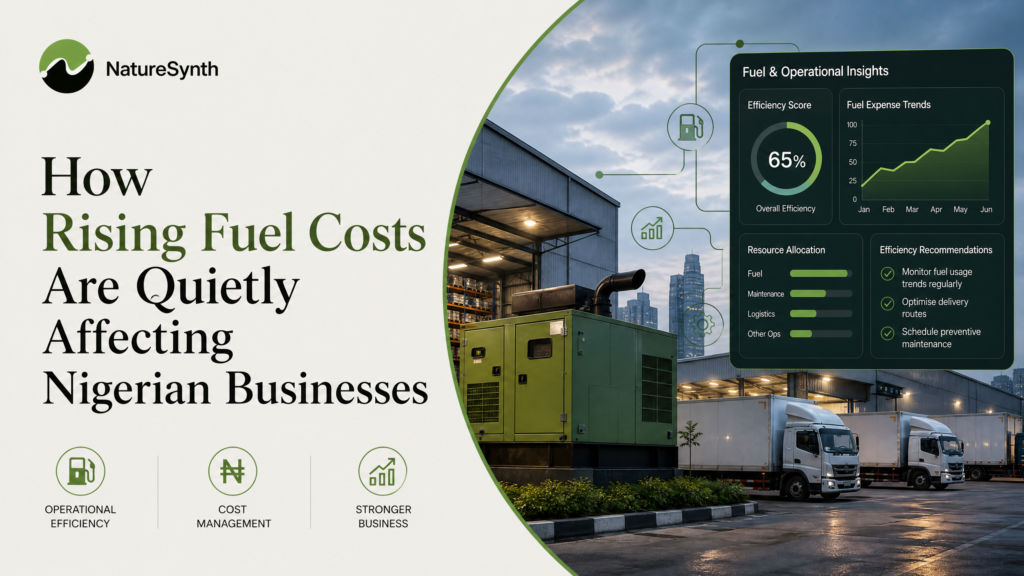
Many business owners may not realize it, but rising fuel costs Nigerian businesses face today are creating deeper problems than higher transport expenses or generator bills. Fuel prices now affect almost every part of business operations.
From transportation and logistics to production and daily operations, many Nigerian businesses feel the impact.
The challenge is not only the increase in fuel prices.
The bigger challenge is the hidden effect these costs create over time.
For many businesses, small inefficiencies now cost more than they did before.
Fuel Costs Affect More Than Transportation
When fuel prices increase, many people immediately think about transportation.
However, the impact goes beyond moving goods and services.
Many Nigerian businesses rely heavily on fuel powered generators because of power supply challenges. Businesses also depend on transportation for deliveries, staff movement, and operations.
As fuel costs increase, operating expenses often rise across multiple areas.
This creates pressure on businesses already dealing with economic uncertainty and rising costs.
Small Inefficiencies Become Bigger Problems
Before fuel costs increased significantly, some businesses overlooked operational waste.
Small inefficiencies seemed manageable.
Unused equipment.
Unnecessary generator use.
Repeated delivery trips.
Poor scheduling.
Wasted resources.
Today, these small problems create larger financial consequences.
Businesses that ignore inefficiencies may unknowingly lose money every day.
Rising Costs Can Reduce Profit Margins
Many businesses cannot immediately increase prices for customers.
As a result, rising operational expenses often reduce profit margins.
Businesses absorb costs while trying to remain competitive.
Over time, this creates pressure on growth and sustainability.
Some businesses respond by reducing services, cutting costs, or delaying expansion plans.
Others begin searching for smarter ways to operate.
Efficiency Matters More Than Ever
Businesses cannot always control fuel prices.
However, they can control internal operations.
This is becoming increasingly important.
Businesses now ask practical questions:
Can we reduce unnecessary generator use, optimize deliveries, improve operational processes and reduce hidden waste?
Sustainability Is Becoming a Business Decision
Many people still think sustainability only relates to environmental discussions.
Today, sustainability also connects directly with efficiency and resource management.
For Nigerian businesses, sustainability increasingly means operating smarter.
Reducing waste.
Improving processes.
Using resources efficiently.
Managing costs carefully.
These decisions affect business performance.
Nigerian Businesses Need Better Visibility
Many operational losses happen quietly.
Businesses often focus on visible expenses while hidden inefficiencies continue in the background.
Without clear insights, businesses may struggle to identify where money disappears.
Understanding operational patterns becomes increasingly important.
Businesses that understand where waste happens often make stronger decisions.
Where NatureSynth Fits
NatureSynth helps businesses identify inefficiencies and understand operational patterns that affect performance.
Instead of relying only on assumptions, businesses gain clearer insights into areas where improvements can happen.
Small operational changes may create meaningful long term impact.
Conclusion
Rising fuel costs are quietly affecting Nigerian businesses in more ways than many people realize.
The challenge is not only higher prices.
The challenge is how these costs amplify existing inefficiencies.
Businesses that improve efficiency and reduce waste may become more resilient in a changing environment.
Next Step
Take a closer look at your operations today.
Ask yourself:
Where are we losing resources?
Which inefficiencies have we accepted as normal?
What small improvements can reduce unnecessary costs?
Small changes often create bigger long term results.